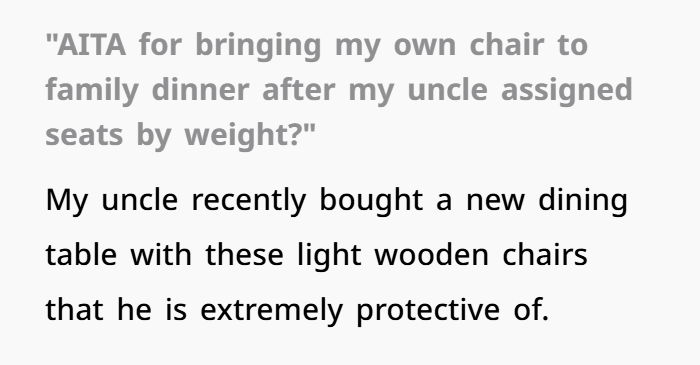
‘AITA for bringing my own chair to family dinner after my uncle assigned seats by weight?’
A family dinner became uncomfortable after an uncle created a seating plan that many relatives felt was unfair and hurtful.
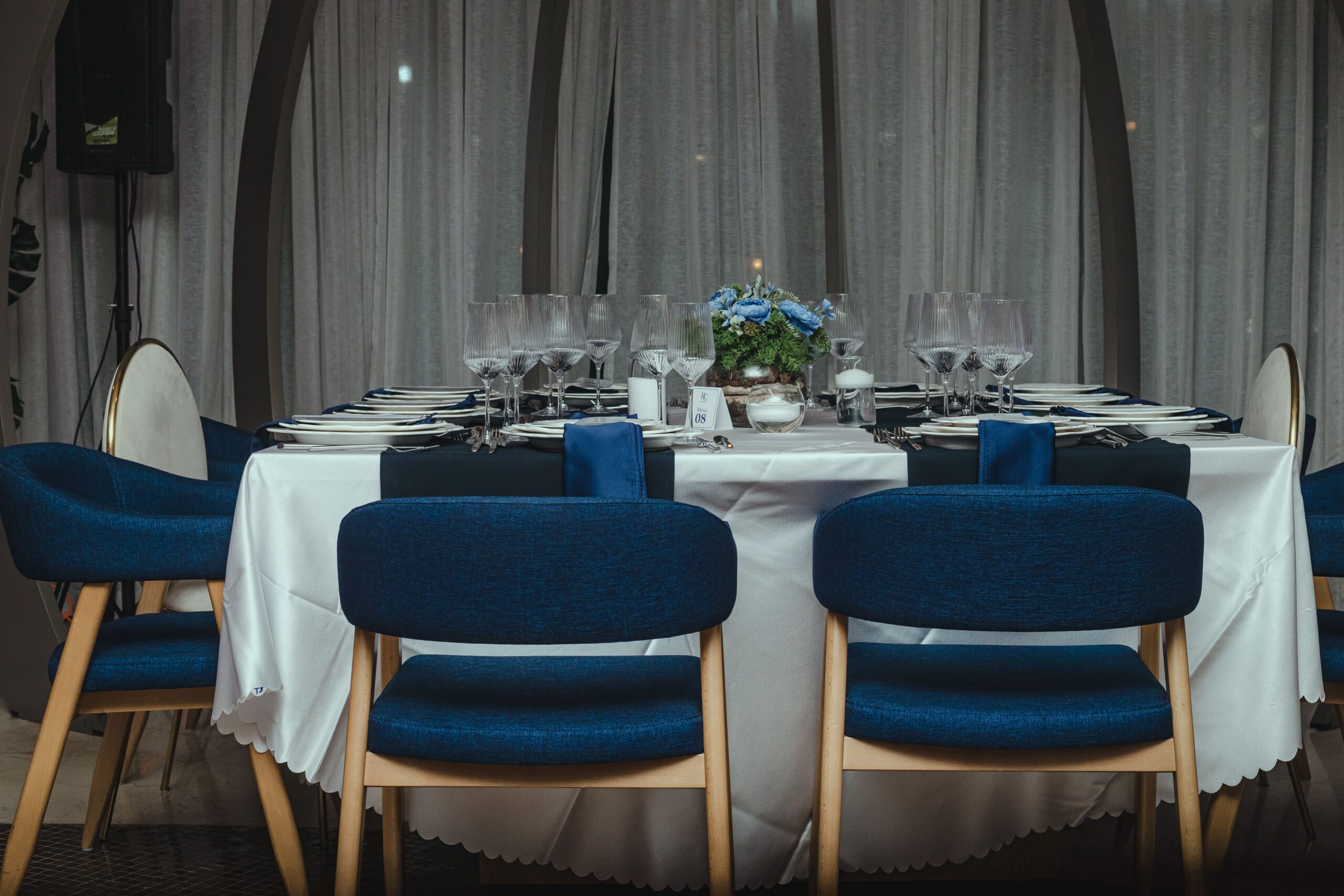
The problem started after he bought a new dining table with lightweight wooden chairs. Worried that the chairs could get damaged, he quietly decided that some heavier family members should sit on folding chairs instead.


The uncle said his choice was only about safety and protecting an expensive purchase. But the way he handled it made people feel separated. Some family members sat at the main dining table, while others were placed off to the side.
Things got worse when he started using name cards to assign seats. The cards made it clear who was allowed at the table and who was expected to sit somewhere else.
One relative felt uncomfortable being singled out in front of everyone. To avoid the situation, they brought their own strong dining chair to the gathering and placed it at the table.
The uncle saw this as a public challenge to his role as the host. However, the relative felt the seating arrangement had already caused embarrassment and made them feel left out.
The disagreement shows how a simple household concern can turn into a much bigger family conflict. Protecting furniture and thinking about safety are reasonable concerns, but the way people are treated matters too.
Family gatherings are usually meant to bring people together. When rules or decisions make someone feel unwanted or judged, they can create emotional hurt and damage relationships.
The situation also brings up bigger questions about family boundaries, respect, body-based discrimination, and how people can handle sensitive issues without making others feel excluded.
more info on reddit
Family gatherings are usually places where people hope to feel welcome, accepted, and included. But when a practical issue becomes connected to someone’s body size, emotions can become much stronger.
Research on weight stigma shows that people who experience embarrassment or unfair treatment because of their size can suffer emotional effects. They may feel stressed, ashamed, or even avoid social situations because they fear being judged.
The American Psychological Association has reported that weight-based stigma is linked to emotional distress and can harm mental well-being. Studies suggest that publicly pointing out someone’s weight or separating them from others often creates more hurt instead of leading to respectful conversations.
Looking at the situation from a practical side, the uncle’s worry about his furniture was not completely unreasonable. Dining chairs usually have weight limits set by manufacturers, and using furniture beyond those limits can lead to broken chairs, injuries, or damage.
Many safety experts recommend checking furniture details and making sure chairs are strong enough for everyone who uses them. The real problem was not the concern itself. It was the way the concern was handled.
A private conversation would have likely changed everything. The uncle could have spoken with family members quietly, bought stronger chairs, or arranged the seating without making anyone feel targeted.
Hosts do more than provide food and a place to sit. They also create the mood of the gathering. A guest who feels embarrassed may remember that painful moment far longer than they remember the meal.
The idea of unequal treatment, often discussed in discrimination law, focuses on situations where people are treated differently because of a personal characteristic. Weight discrimination is not protected under all laws, but some places have started creating rules to address unfair treatment based on body size.
Experts who study social behavior have found that visible separation can send a powerful message. Even if someone believes they have a neutral reason, others may see the action as a sign that they are being excluded or judged.
Similar debates have happened in many settings, including restaurants, airlines, workplaces, and family events. Issues involving body size, accessibility, and physical accommodations can become sensitive because they involve both safety and personal dignity.
Airline seating policies are one example. Airlines often focus on safety rules and space requirements, but criticism sometimes happens when those policies make passengers feel embarrassed or exposed instead of privately supported.
In the family dinner situation, the main conflict was between protecting property and protecting people’s feelings. The uncle had a right to care about his furniture, but assigning separate seats in front of everyone made some relatives feel disrespected.
At the same time, bringing a personal chair to the dinner can also be seen as a reaction that challenged the host’s control over his own home.
A better solution would have been for both sides to recognize each other’s concerns. Furniture safety matters, but so does treating family members with kindness and respect.
The uncle could have handled the issue privately and offered comfortable options. The relative could have shared their feelings through a direct conversation instead of making a public statement with the chair.
In the end, the disagreement was never just about furniture. It was about something much deeper: whether everyone at the table felt respected, valued, and included.
Here’s what people had to say to OP: