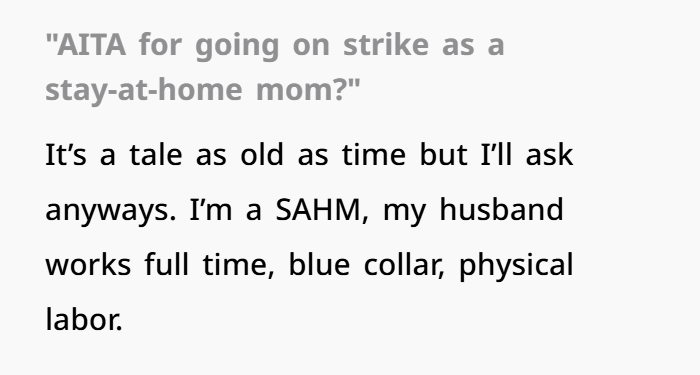
‘AITA for going on strike as a stay-at-home mom?’

A stay-at-home mother started a heated conversation online after she decided to “go on strike” against her husband. The move came after years of arguments about who should handle the responsibilities at home.
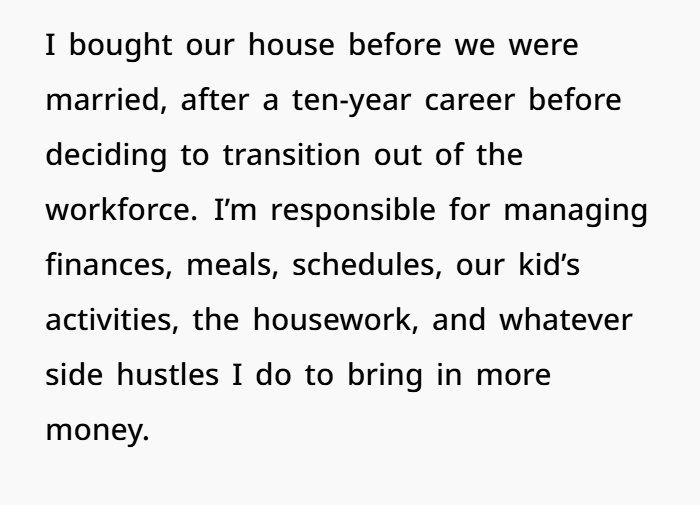
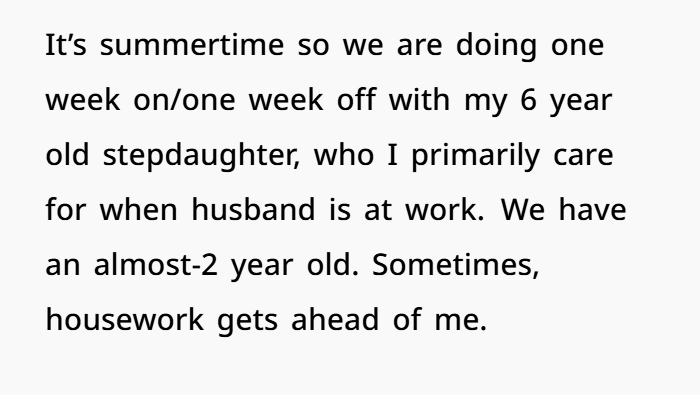
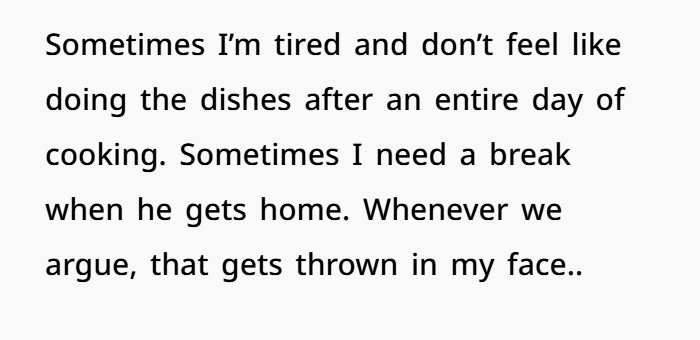
The mother explained that she takes care of much more than just cleaning and cooking. She manages the family’s finances, plans meals, keeps track of schedules, looks after the children, organizes the home, and even works on side projects to bring in extra money.


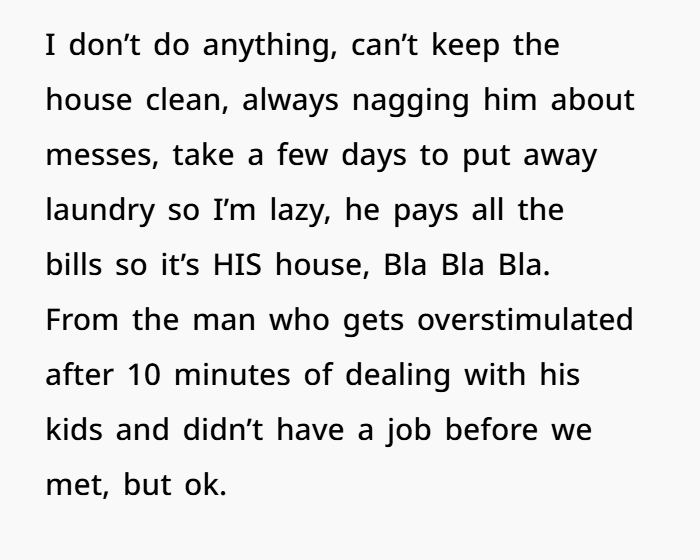
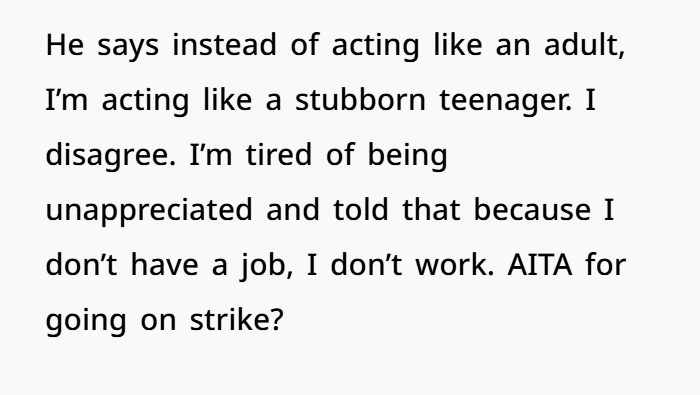
She says her efforts often feel ignored because she does not have a regular job outside the house. In her view, the work she does every day is still real work, even if she does not receive a paycheck for it.
Her husband sees the situation differently. He works a physically demanding blue-collar job and believes he carries the main financial responsibility for the family. He feels that household duties should still be handled, even when both partners are tired.
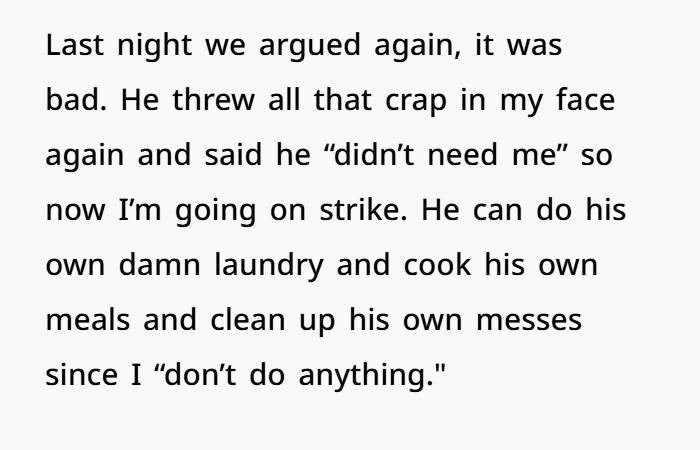
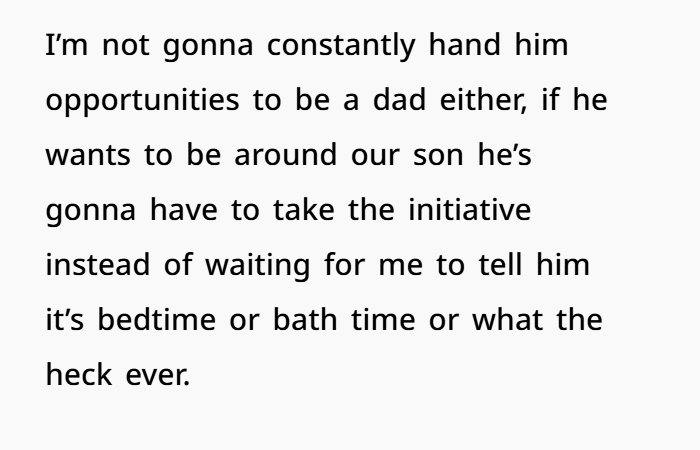
The argument became worse after he reportedly told her that he “didn’t need” her. After hearing those words, she decided to stop doing many of the things she normally handled for him.
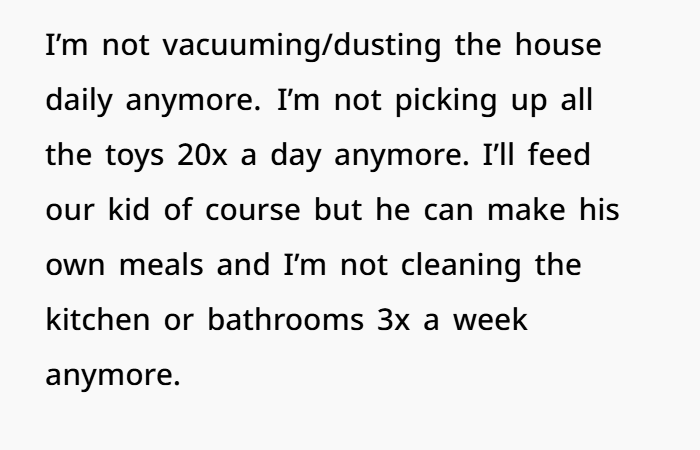
She stopped washing his clothes, preparing his meals, taking care of his personal cleaning tasks, and reminding him about parenting responsibilities. While her husband called the decision childish, she saw it as a way to show how much unpaid work she was doing behind the scenes.
The disagreement also exposed bigger problems in their marriage. The issue was not only about chores but also about feeling unappreciated, poor communication, built-up frustration, and emotional exhaustion.
Both partners admitted that their arguments had become unhealthy. They said they had hurt each other with harsh words and that some fights had even become physical.
Although they are not planning to divorce right now, the couple decided to seek counseling. They hope to work on respect, teamwork, and finding a fair balance of responsibilities in their marriage.
Read more info on reddit
The Hidden Value of Unpaid Housework and Why It Causes Conflict in Many Marriages
This disagreement between the couple points to a problem many families face: the struggle to recognize unpaid work at home as real work.
Running a household takes a lot of time and energy. Cooking meals, caring for children, cleaning, planning appointments, managing schedules, and keeping everything organized all require effort. Even without a paycheck, these responsibilities have real value.
Studies about unpaid labor have shown that household work includes physical tasks, emotional support, and daily planning. Many people do not see this work because it happens quietly in the background.
This is often called the “mental load.” It means being the person who remembers everything, plans ahead, and makes sure the family’s daily life keeps moving.
For example, it is not just taking a child to a doctor’s appointment. It is remembering to book the appointment, knowing when it is needed, checking the schedule, and making sure everything is ready. The same goes for planning meals, buying household items, keeping track of school events, and managing family routines.
The problem is often not only about who does a task. It is also about who has to notice that the task needs to be done in the first place.
Research from organizations like the Pew Research Center has found that disagreements about chores and childcare are common reasons couples argue. Problems often start when one person feels their efforts are ignored, while the other feels their own contributions are not appreciated.
Stay-at-Home Parenting Is Still Full-Time Work
A common misunderstanding is that someone “does not work” if they do not earn a paycheck. For many stay-at-home parents, their daily responsibilities are similar to several jobs combined.
They may act as a childcare provider, cook, home manager, scheduler, and person responsible for handling family finances and planning.
Some reports have tried to estimate the financial value of stay-at-home parenting by calculating what it would cost to pay others for these services. While the numbers can vary, the idea is clear: childcare and household management are valuable forms of work.
The situation can become difficult when one spouse earns the money and the other manages the home. Sometimes earning income can accidentally create a feeling of power or control.
Statements like “I pay the bills, so it is my house” can hurt a relationship because many couples see marriage as a shared partnership. Supporting a family involves more than just bringing home money.
Why Some People “Go on Strike” in Relationships
Stopping household duties is not a new reaction when someone feels ignored or taken for granted.
In some cases, a person may step back from responsibilities because they feel exhausted and want their partner to understand how much they normally handle.
However, there is a difference between setting a boundary and trying to punish someone. A healthy boundary is about expressing needs and creating change. A punishment is meant to make the other person suffer.
If someone stops doing chores to show that something feels unfair, the real solution usually comes from honest conversations, not a long-term battle over who does what.
Couples often need to sit down, talk openly, and agree on a fair way to divide responsibilities.
Money, Ownership, and Marriage
The disagreement also brings up questions about money and property.
Even if one partner bought a home before marriage, ownership rules can depend on local laws. In many places, property owned before marriage may stay separate, but things can become complicated if finances become mixed or both partners contribute in different ways.
Legal ownership and emotional partnership are not always the same thing.
A person may legally own something, but a strong marriage usually depends on both partners feeling respected, valued, and included.
Physical Arguments Raise Bigger Concerns
The situation became more serious when the couple admitted that some arguments had turned physical.
Disagreements about chores, money, or responsibilities are common in relationships. But pushing, hitting, or throwing things during fights can become dangerous and should not be ignored.
Relationship problems involving physical aggression need serious attention. Communication issues can sometimes be worked on through counseling, but safety and accountability also need to be addressed.
The Real Issue Is Respect, Not Just Chores
At the heart of this conflict, the problem is not really about laundry, dishes, or cleaning.
It is about feeling valued.
One partner feels tired from working a demanding job and carrying financial pressure. The other feels overwhelmed by unpaid work that seems invisible and unappreciated.
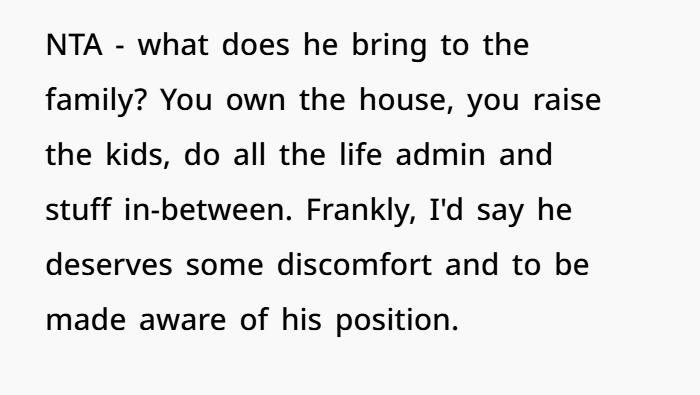
Healthy relationships usually work best when both people understand that different kinds of work help a family survive. A paycheck helps pay the bills, but childcare, planning, and managing a home keep daily life running.
The household “strike” may have shown how much one person was doing, but lasting change requires more than stopping chores. It requires respect, better communication, fair responsibilities, and a willingness from both partners to recognize each other’s efforts.
Here’s what people had to say to OP:
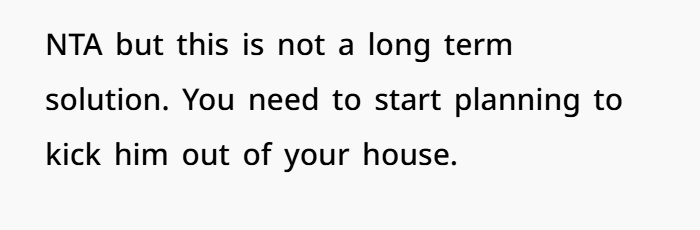
ButItSaysOnline said:
Youwhooo60 said:
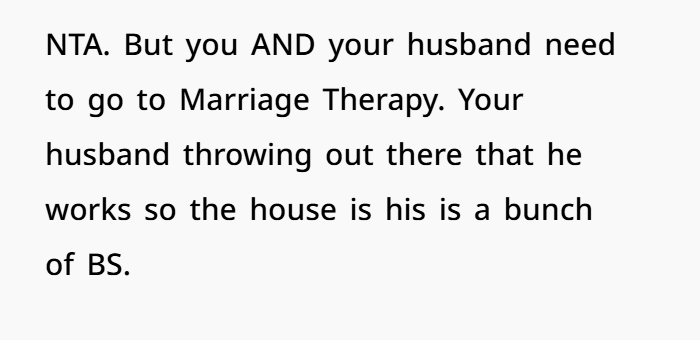
CCalamity- said: