AITA for Refusing Family Therapy After My Parents Failed to Protect Me?

A 19-year-old man is wondering if he is wrong for refusing family therapy with his parents. He feels that they abandoned him and failed to protect him during his childhood.
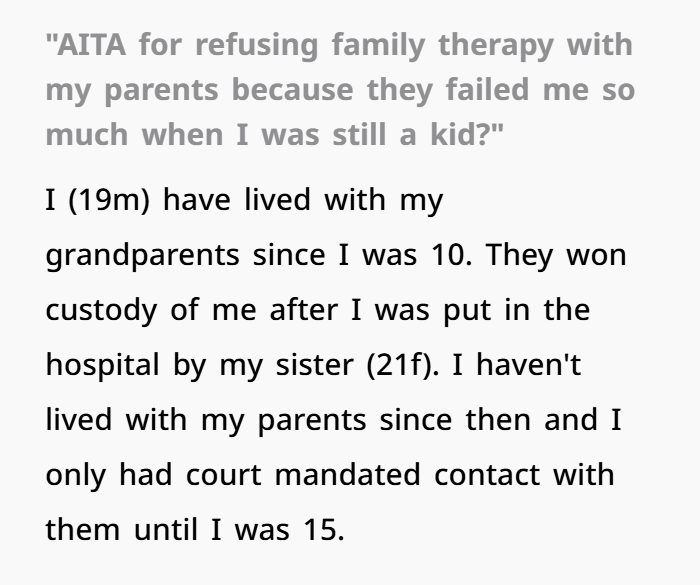
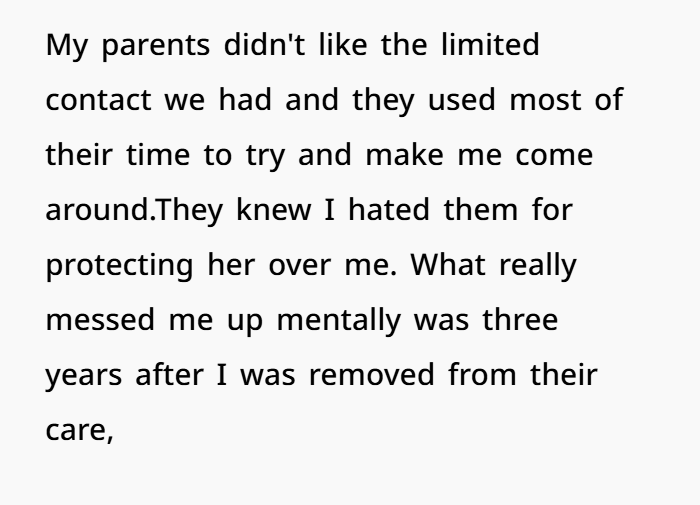
When he was 10 years old, he was taken away from his parents’ care after his older sister seriously injured him during a violent incident. His injuries were severe enough that he needed to go to the hospital.


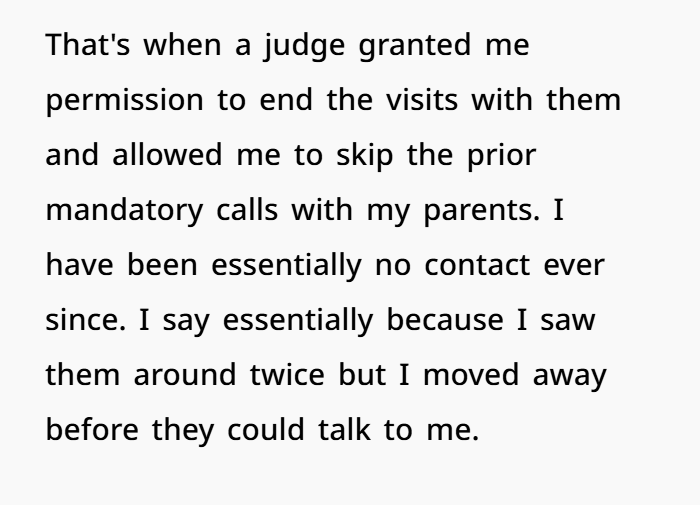
After that, his grandparents became his legal caregivers. For years, he still had court-ordered visits and contact with his parents. Later, a judge allowed him to stop those visits and end communication with them.
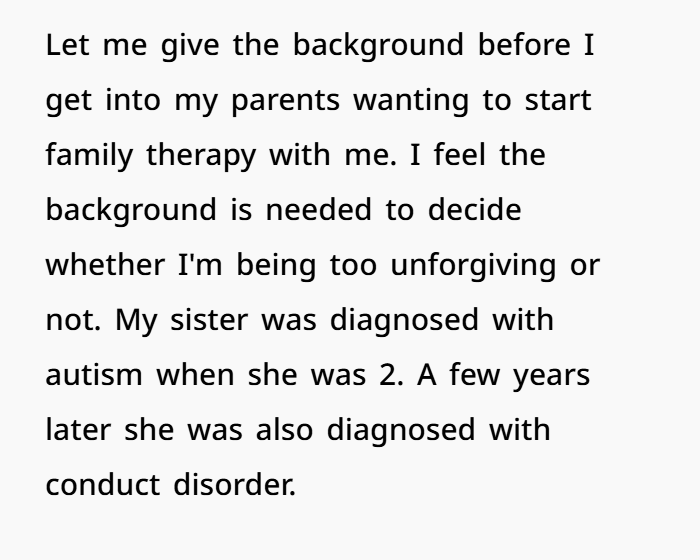
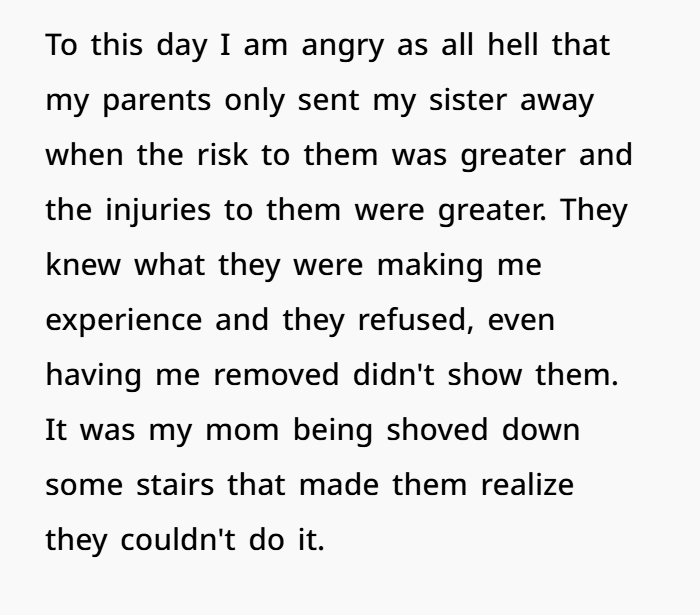
The main issue comes from the choices his parents made while raising his sister. She had serious behavior problems along with autism and conduct disorder. Even after professionals and child welfare workers warned his parents that the home was unsafe, they refused to place her in a residential program or make other arrangements.
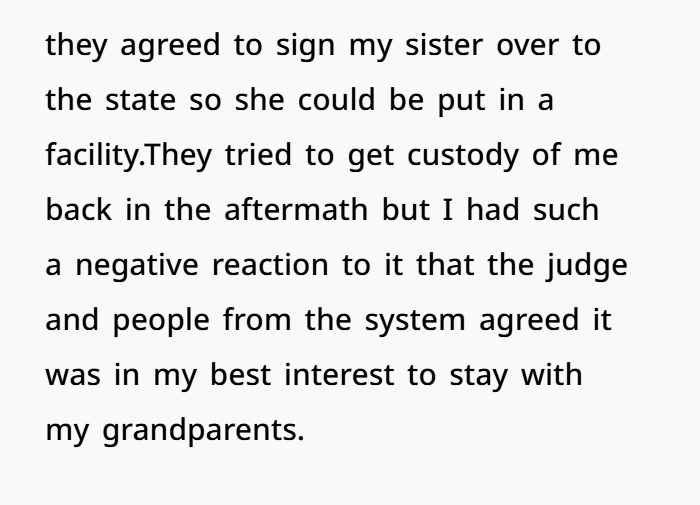
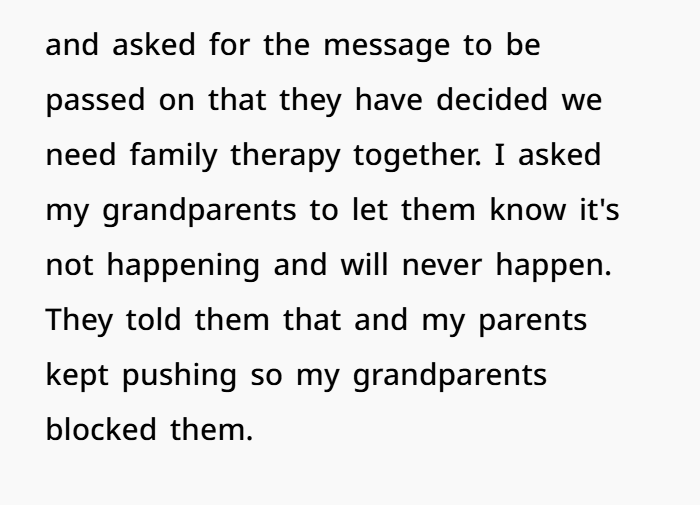
The situation continued until it became dangerous and their son was badly hurt. Years later, after his sister was placed into state care, his parents tried to rebuild their relationship with him through family therapy.
However, he feels they only made changes when they were affected by the situation themselves. He believes they did not take the same action when he was the one who needed protection.
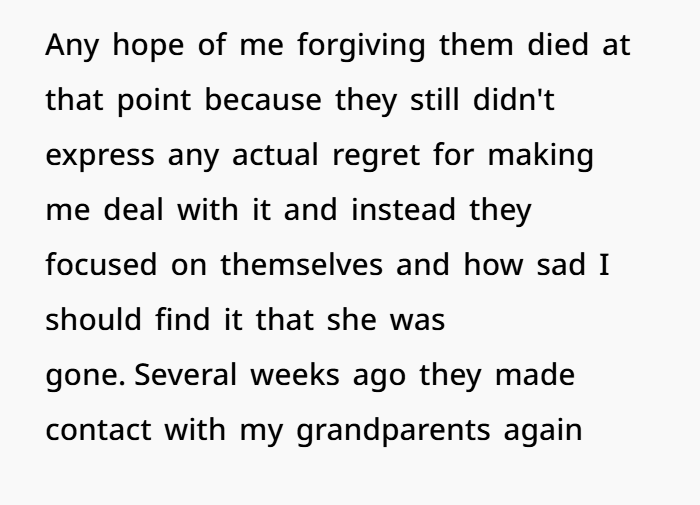
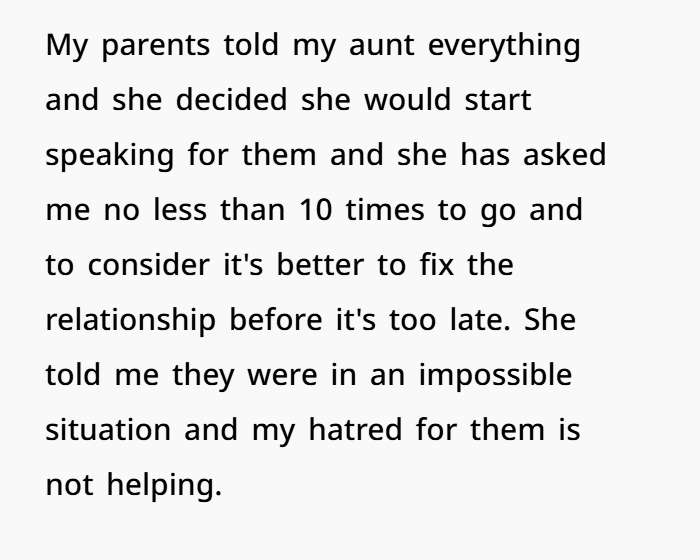
Now, his parents say therapy could help fix their relationship. His aunt also wants him to give it another chance. She believes his parents were dealing with a very difficult situation and that staying angry will make it harder for him to heal.
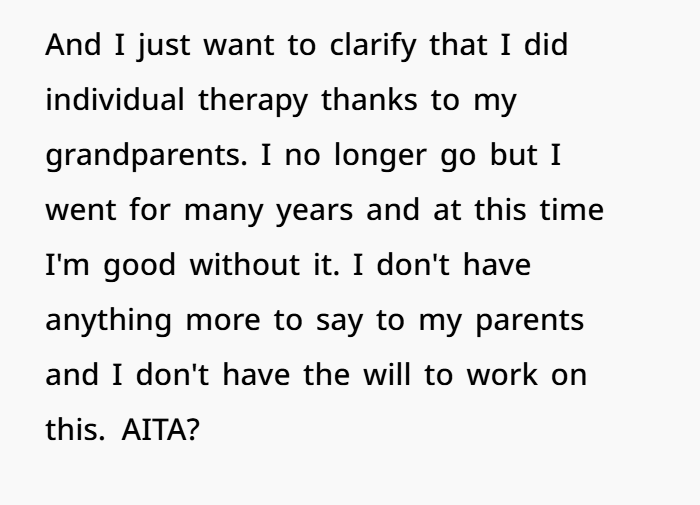
But he feels he has already worked through his trauma after years of personal therapy. He does not believe he is required to rebuild a relationship with people who failed to keep him safe when he was young and vulnerable.
More info on reddit
This situation brings up difficult questions about child safety, parental responsibility, healing from childhood trauma, and family separation. Families raising children with serious disabilities can face extremely hard challenges, but experts agree that keeping one child safe cannot mean putting another child’s safety and emotional health at risk.
Studies about childhood trauma and adverse childhood experiences (ACEs) show that growing up around violence, fear, neglect, or unsafe situations can affect a person for many years. Research from the Centers for Disease Control and Prevention (CDC) on ACEs links these experiences with higher risks of mental health struggles, including anxiety and depression, as well as other long-term challenges.
When a child has severe behavior problems, parents may have to make very difficult choices about treatment, special care, and keeping everyone in the home safe. However, child welfare professionals and disability advocates generally agree that a diagnosis does not remove a parent’s duty to protect every child in the family.
Children with disabilities deserve proper care, support, and understanding. At the same time, other children in the home should not be expected to live in a situation where they are repeatedly unsafe or harmed. Child welfare guidance explains that families must find a balance between supporting a child with disabilities and creating a safe environment for everyone.
The legal system has often viewed a parent’s failure to protect a child from serious and predictable harm as a serious matter. In many places, child protection agencies can step in when parents knowingly allow a dangerous situation to continue. Courts usually focus on what is best for the child, including safety, stability, and emotional well-being, rather than keeping a family together at any cost.
This story also shows the difference between forgiveness and rebuilding a relationship. Many adults who experienced childhood trauma work on healing without choosing to reconnect with the people who hurt them. Mental health professionals often explain that healing does not always require restoring contact, especially when the person who caused harm has not fully accepted responsibility.
Family therapy can help when everyone involved is willing to talk honestly, recognize past mistakes, and work toward better communication. But therapy may not help if it is used to pressure someone into forgiving before they are ready or to downplay the harm they experienced. Trauma experts often focus on creating a safe space where survivors feel heard and respected.
A major part of this situation is the timing of the parents’ actions. From the son’s point of view, they only looked for a solution after the situation had already caused serious damage and after they were no longer able to continue as before. While their decision to place his sister into state care may show they finally accepted that the situation could not continue, he feels that this realization came too late.
Many families experience similar situations where adult children choose distance from parents who were unable to protect them or meet their emotional needs during childhood. Therapists and courts increasingly recognize that adults have the right to decide what kind of relationship they want with their parents, especially when contact causes emotional pain or brings back past trauma.
The main question is not whether the parents were facing a difficult situation—they were. The bigger question is whether their son should have had to lose his sense of safety and security because of it.
Parents have a responsibility to support children with special needs, but they also have a responsibility to protect every child in their care. His choice to refuse family therapy may not simply be about anger. It may be a boundary he created after years of feeling ignored, unsafe, and unprotected.
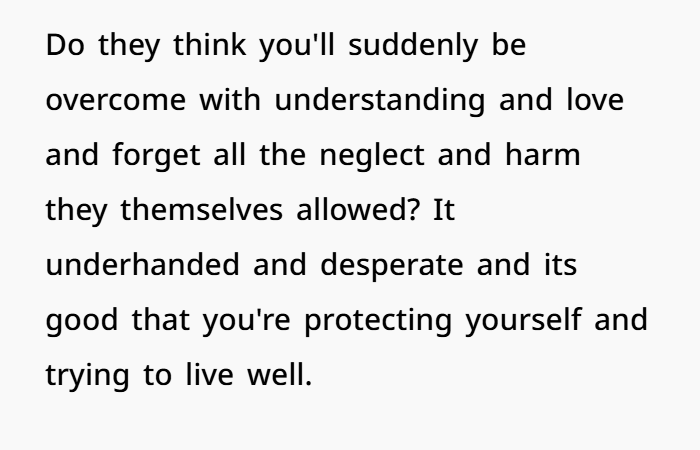
Here’s what people had to say to OP:
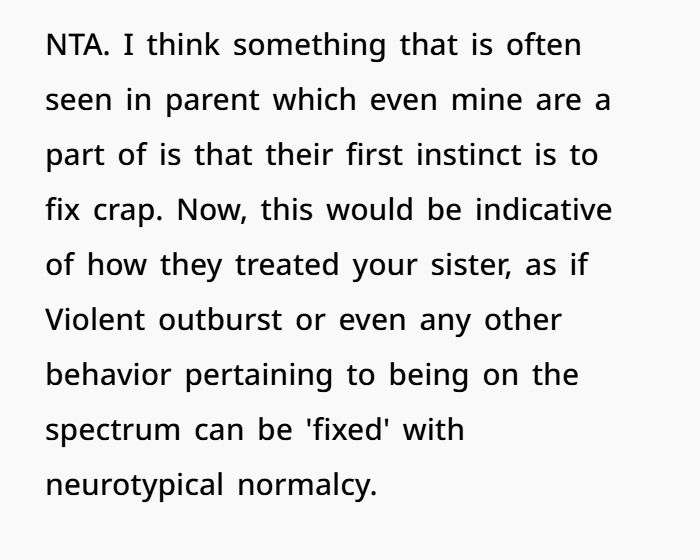
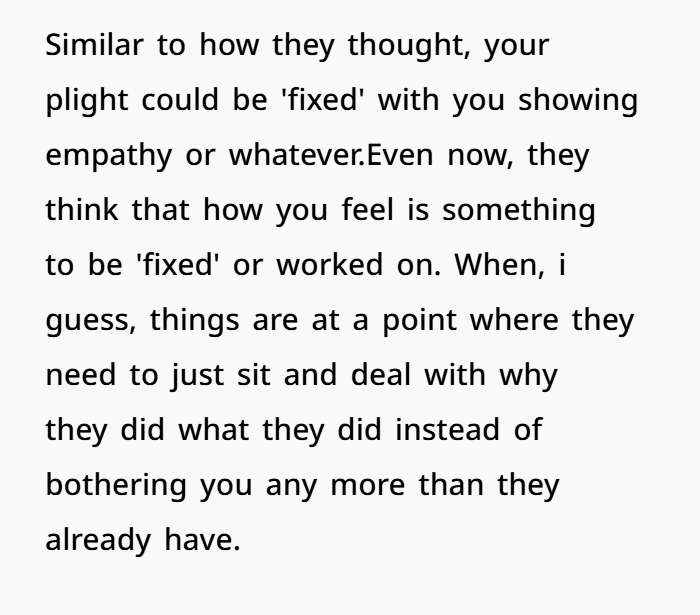
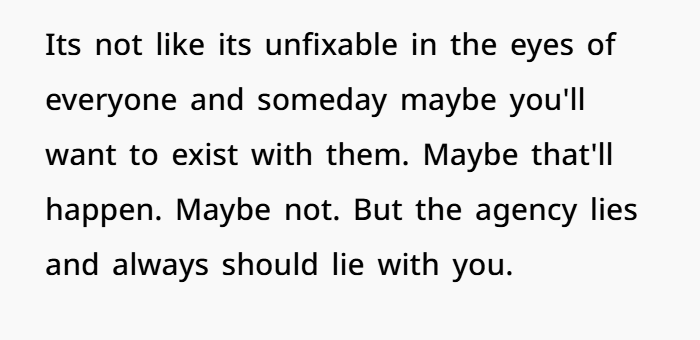
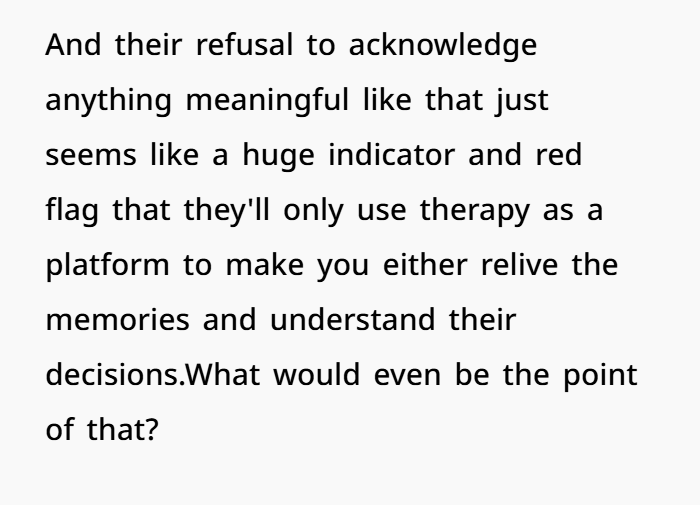
FarOven5415 wrote
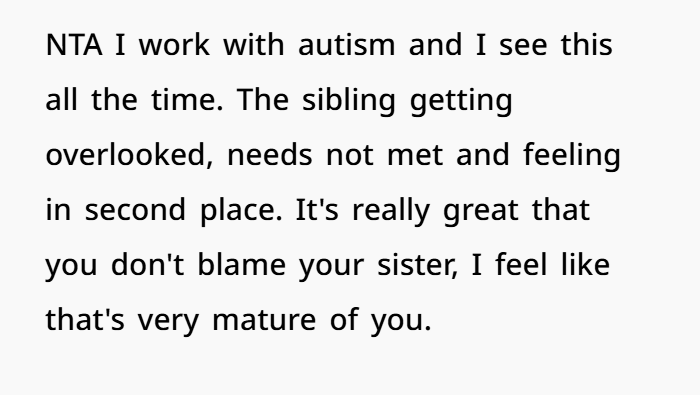
No_Category_8035 wrote:
DynkoFromTheNorth wrote: