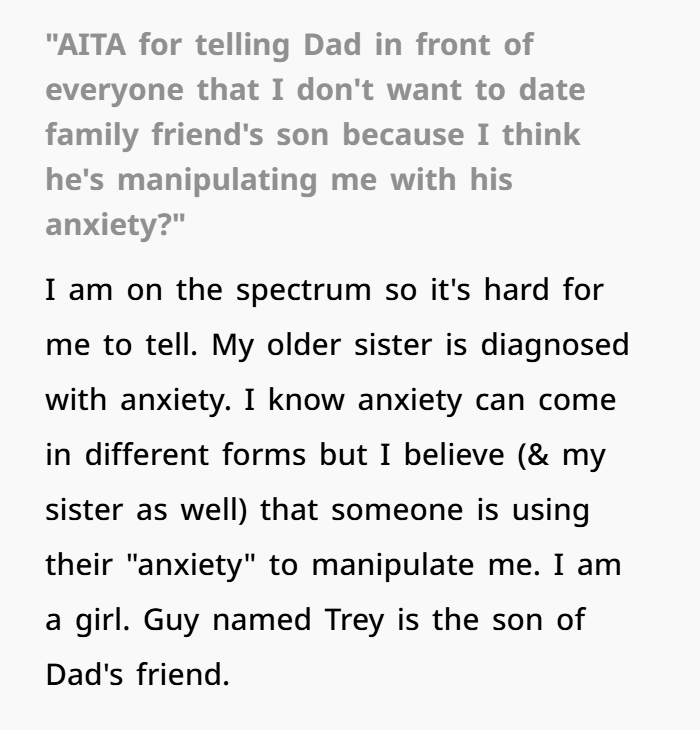
‘AITA for telling Dad that I don’t want to date our family friend’s son in front of everyone?’

A teenage girl on the autism spectrum became involved in a family disagreement after she ended a short relationship with Trey, the son of her father’s close friend.
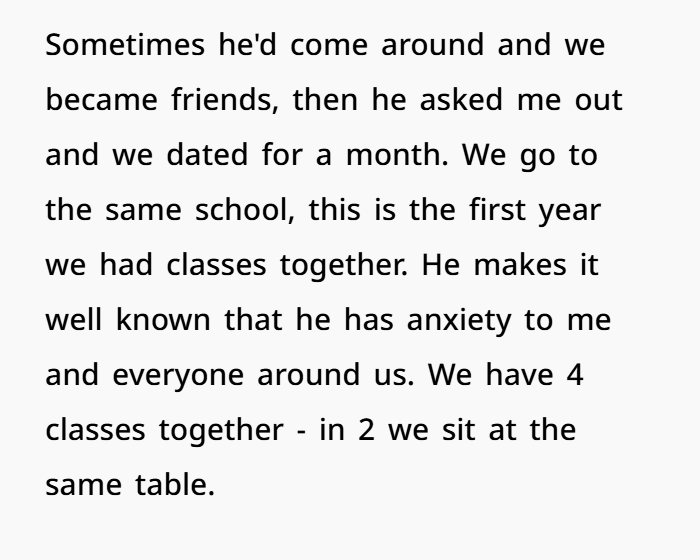
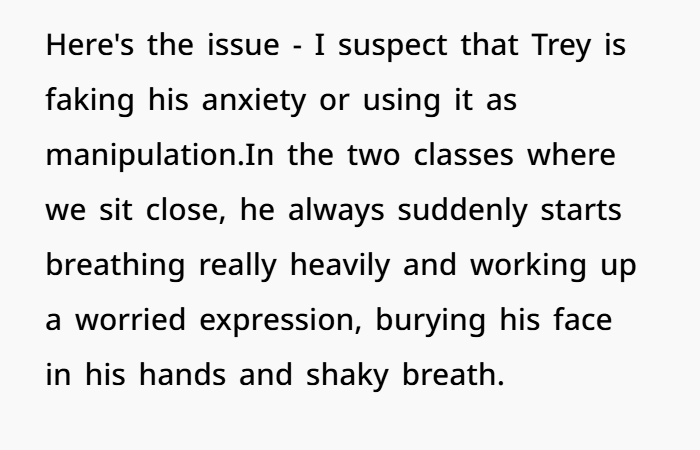
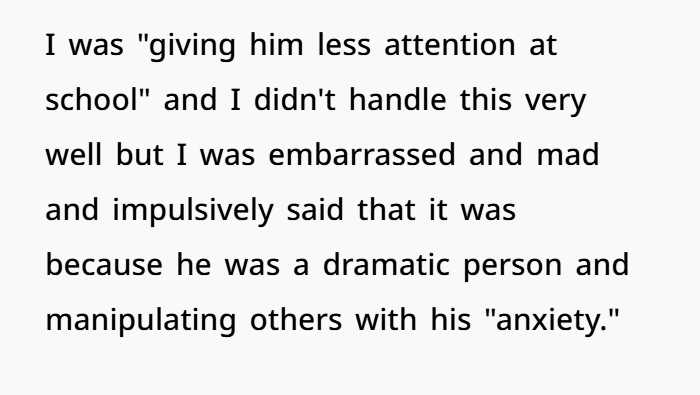
Trey was known as a friendly, confident, and polite person. However, the girl started noticing some behaviors that made her uncomfortable. She saw that he often showed signs of anxiety in certain situations, especially when they sat together in class or when other people were watching.


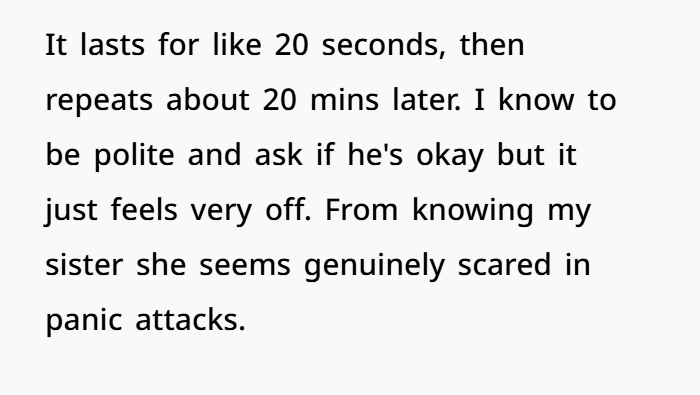
The girl shared that her older sister has been diagnosed with anxiety. Because of this, she had some understanding of what real anxiety episodes can look like.
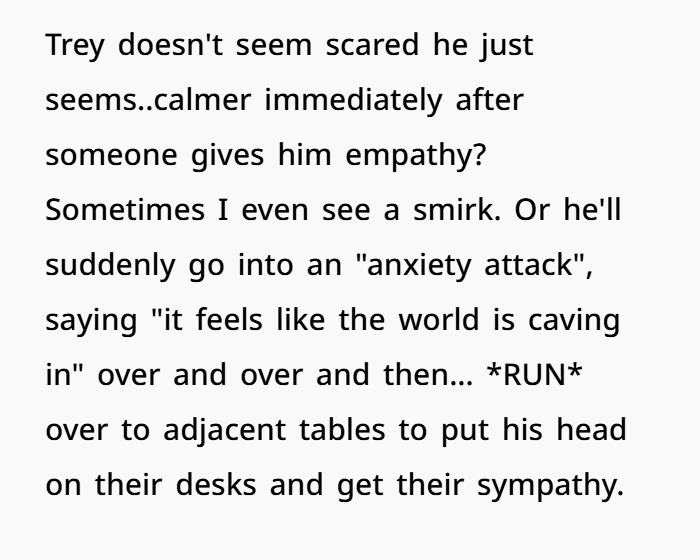
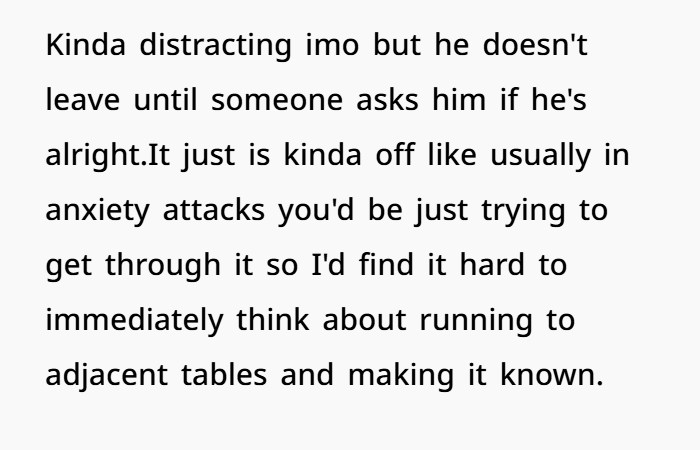
She felt that Trey’s reactions seemed different. She noticed that his distress often went away quickly after he received attention or comfort from classmates. She also saw that these moments happened more often when she was around him but did not seem to happen in other situations.
Over time, she began to worry that his anxiety might be used to get sympathy, reassurance, or control over the relationship.
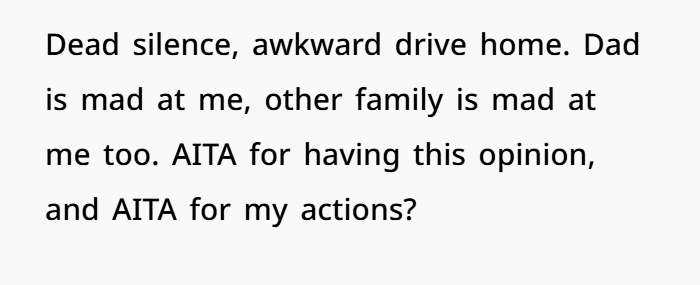
After she ended the relationship privately, things became more serious during a family dinner. Trey asked her about the breakup in front of everyone, which made her feel pressured and embarrassed.
In that moment, she said she believed he was being “dramatic” and using his anxiety to influence how others saw him. Her words caused tension between both families. Some relatives felt she was being unfair and judging someone’s mental health struggles.
Later, she explained her side of the story to her father. After hearing her concerns, he became more understanding of why she felt the way she did.
This situation brings up bigger questions about mental health, emotional control in relationships, personal boundaries, and how difficult it can be to tell the difference between real emotional struggles and unhealthy behavior patterns.
More info on reddit
Mental health conditions like anxiety can be complicated, and they do not look the same for everyone. According to the National Institute of Mental Health (NIMH), anxiety disorders involve strong fear, worry, or changes in behavior that can affect a person’s daily life.
Common signs of anxiety can include fast breathing, feeling restless, trouble focusing, physical discomfort, and feeling like things are out of control.
However, experts say we cannot know for sure what someone is experiencing just by watching their actions. A person having a panic attack may react in different ways depending on their personality, surroundings, coping skills, and the support they have.
This situation can be difficult because mental health symptoms and relationship behaviors can sometimes look similar. Someone with anxiety may ask for reassurance from others because it can help them feel calmer for a short time.
At the same time, if a person often makes others feel responsible for controlling their emotions or constantly needs reassurance, it can create an unhealthy relationship pattern.
Psychologists often talk about this as emotional dependency or repeated reassurance-seeking. Research on anxiety shows that relying too much on other people’s reassurance can sometimes keep anxiety going because the person may not build their own coping skills.
The American Psychological Association (APA) explains that anxiety treatment often focuses on learning healthier ways to handle stress and fear instead of depending only on others for comfort.
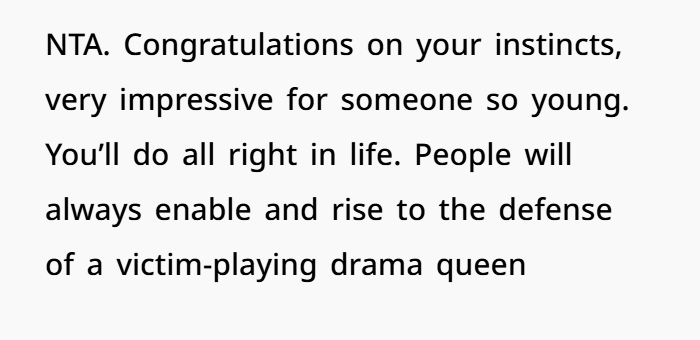
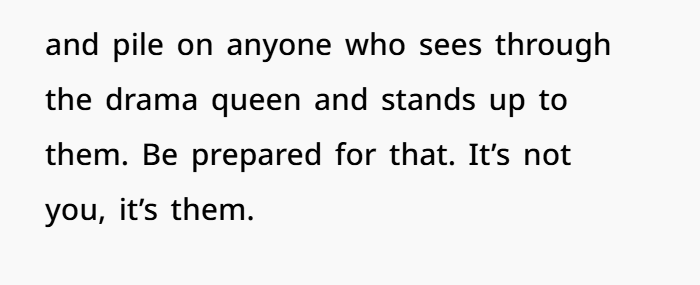
The internet had OP’s back.
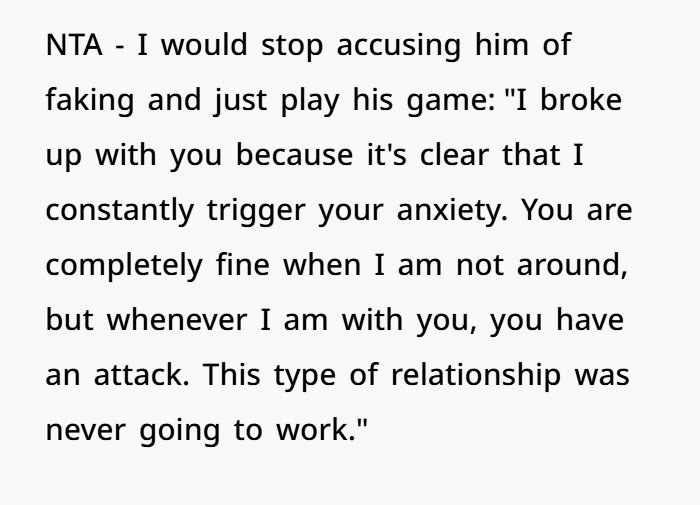
Impossible_Rain_4727 wrote:
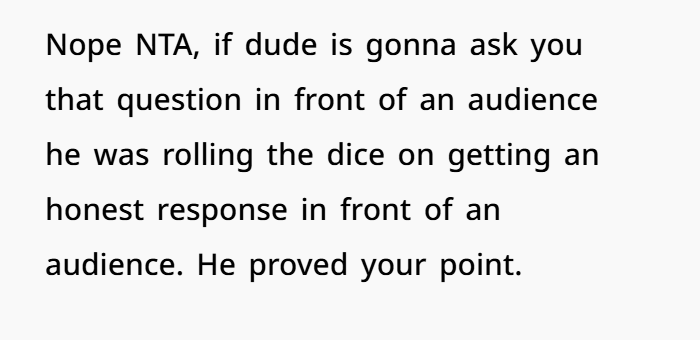
EmBZee wrote:
Content_Plenty_268 wrote: