‘AITA for telling my boyfriend’s sister to help instead of criticizing me?’

A 22-year-old woman finds herself in a difficult family situation after standing up to her boyfriend’s older sister. The sister had been making fun of her efforts to help during a big family barbecue.
The two women had always been friendly and polite with each other. However, the sister often made sarcastic comments that she called “jokes.” When people felt hurt by them, she would usually say they were being “too sensitive.”


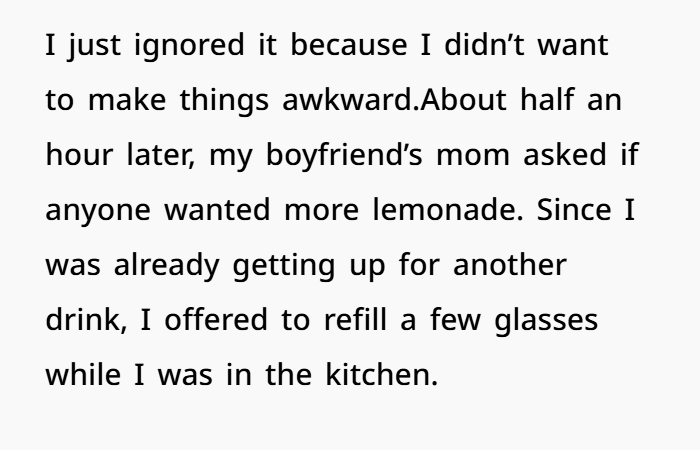
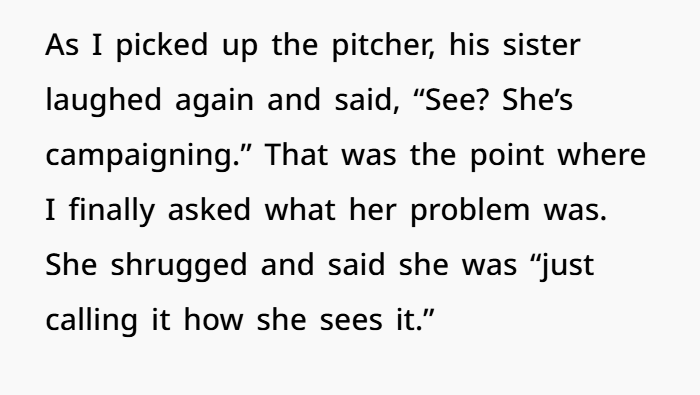
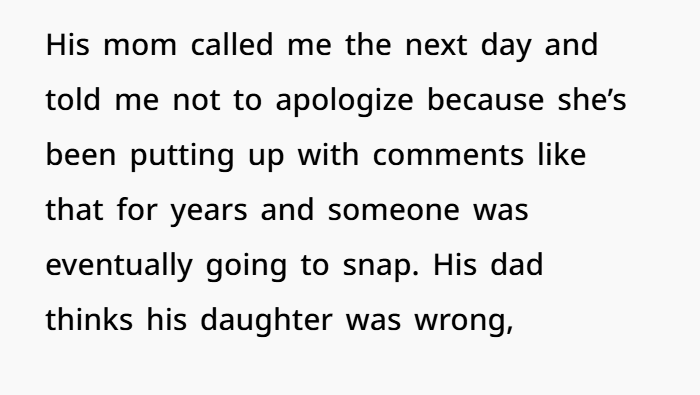
During the barbecue, the woman spent a lot of time helping her boyfriend’s mother prepare and run the event. After others thanked her for helping, the sister started making comments that she was only doing it to get attention and “earn daughter-in-law points.”
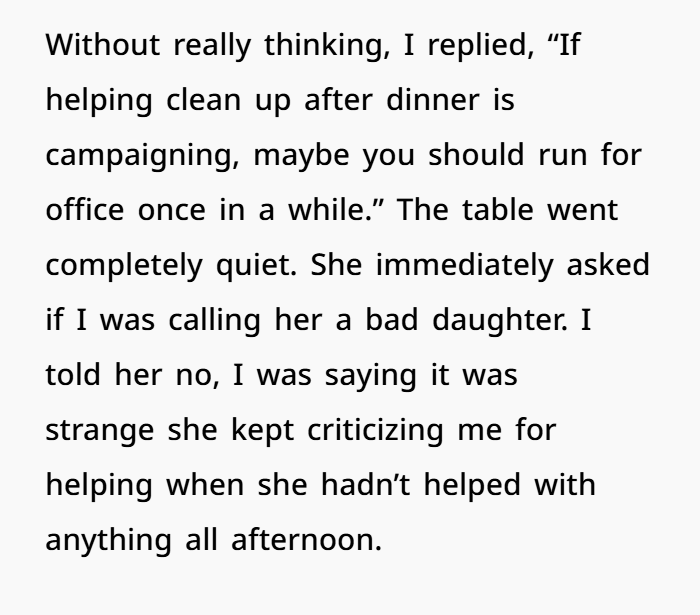
At first, the woman ignored the comments because she didn’t want to start an argument. But after hearing the same criticism again and again, she finally responded. She explained that helping someone does not mean you are trying to impress them.
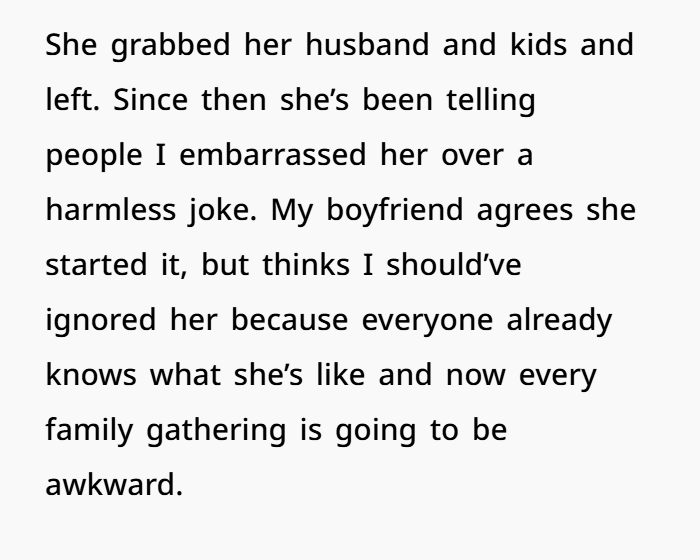
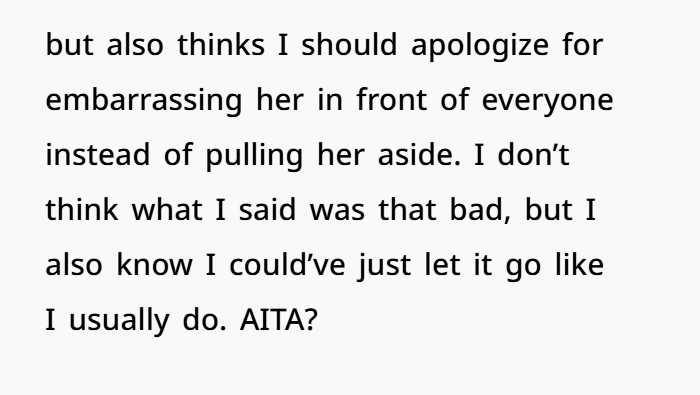
The situation became more serious when the sister felt embarrassed in front of the family and decided to leave with her family. Some relatives felt the woman had every right to defend herself after being criticized many times. Others believed the issue should have been talked about privately.
The situation shows how family relationships can become complicated when people use sarcasm, avoid honest conversations, or ignore personal boundaries. It also brings up a common question: should keeping peace mean accepting repeated disrespect from others?
More info on reddit
Family conflicts are often hard to solve because they are usually not caused by just one comment. They often grow from repeated behavior, old frustrations, and the belief that someone always has to “keep the peace.”
In this situation, the problem was not only about a joke made at a barbecue. It was part of a longer pattern where one person used humor to criticize another person while expecting everyone to accept it without saying anything.
When Jokes Become Passive-Aggressive Comments
Psychologists often call this type of behavior passive-aggressive communication. This happens when someone shows negative feelings in indirect ways, such as through sarcasm, teasing, or comments that sound like compliments but are actually meant to hurt.
Research from the American Psychological Association suggests that hidden criticism and indirect hostility can harm relationships. The person on the receiving end may feel confused because they are unsure if the comment was meant as a joke or as a real insult.
The sister’s comments about the woman helping only to gain approval can be seen as a form of social undermining. This means someone subtly tries to make another person look less genuine, less valued, or less respected in a group.
Studies on workplace and social relationships have found that repeated negative behavior like this can create stress, lower trust, and make people feel uncomfortable around each other.
The Family Pattern of “That’s Just How She Is”
Another important part of this conflict is how the family has responded to the sister’s behavior. Some relatives seem to have accepted her sarcasm as part of her personality and avoid confronting her to prevent arguments.
This often happens in families where one person becomes known as “the difficult one.” Instead of addressing the behavior, others may adjust around that person and try to avoid upsetting them.
Family experts often study this through family systems theory, which was developed by psychiatrist Murray Bowen. The theory explains that families can develop repeated roles over time. One person may become the critic, another may avoid conflict, and someone else may try to keep everyone calm.
In this situation, the woman’s boyfriend seems to understand that his sister went too far but also worries about what might happen if he challenges her. This creates a common family problem: avoiding conflict may look peaceful, but it can also allow hurtful behavior to continue.
Was the Woman’s Response Too Much?
The woman’s reply about the sister “running for office” if helping others was considered campaigning was sarcastic and said in front of others. It was not a major insult, but it did use the same kind of humor the sister had been using.
The difference was that the woman’s comment directly pointed out the problem instead of hiding criticism behind a joke.
Healthy communication does not always mean avoiding disagreements. Experts often suggest that people should express their feelings clearly while still showing respect. Setting boundaries can help relationships become healthier because everyone understands what behavior is acceptable.
At the same time, some experts believe public arguments can make situations worse. When people feel embarrassed in front of others, they may focus more on defending themselves than understanding why someone is upset.
Research on conflict shows that people often react strongly when they feel their reputation or image has been damaged.
When “Just Joking” Creates Real Problems
Many conflicts happen when someone says hurtful things and then protects themselves by claiming they were only joking. This issue appears in families, friendships, workplaces, and other relationships.
When deciding if repeated jokes have crossed a line, people often look at things like how often it happens, the effect it has on the person, and whether the person feels safe speaking up.
Workplace rules, for example, often separate one-time comments from repeated patterns of behavior. The U.S. Equal Employment Opportunity Commission (EEOC) explains that repeated actions and their impact are important when looking at harassment situations.
Family disagreements are not the same as workplace cases, but the same idea can apply: one comment may seem small, but repeated behavior can create bigger problems over time.
Final Thoughts
The main issue is not simply whether the woman should have stayed quiet or whether the sister deserved to be called out. The bigger question is whether keeping family peace means one person has to accept comments that repeatedly make them uncomfortable.
The woman first tried to ignore the situation and avoid an argument. She only responded after hearing repeated comments about her intentions. The sister’s reaction shows that the conflict was likely about more than one comeback. It was also about being challenged after a behavior that others had allowed for a long time.
A healthier solution would require both sides to understand their role. The sister may need to recognize that repeated sarcastic comments can hurt people, even when they are called jokes. The woman may also need to understand that responding publicly can make family conflicts stronger.
Clear boundaries and honest conversations are usually more helpful than staying silent and building resentment. They give family members a better chance to rebuild trust and improve their relationships.
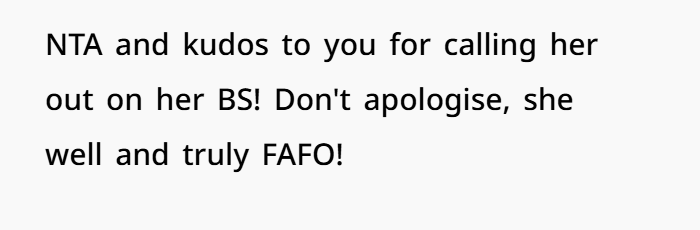
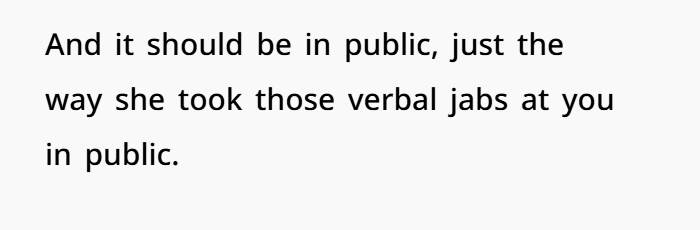
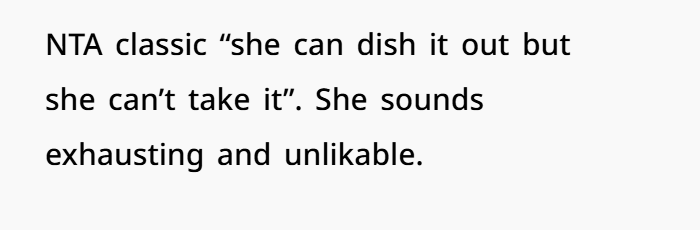
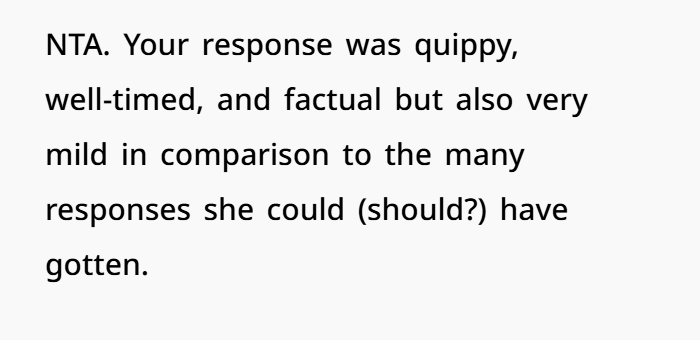
Here’s what people had to say to OP: