Dad and mom keep education fund from daughter in film school, give some to son in STEM.

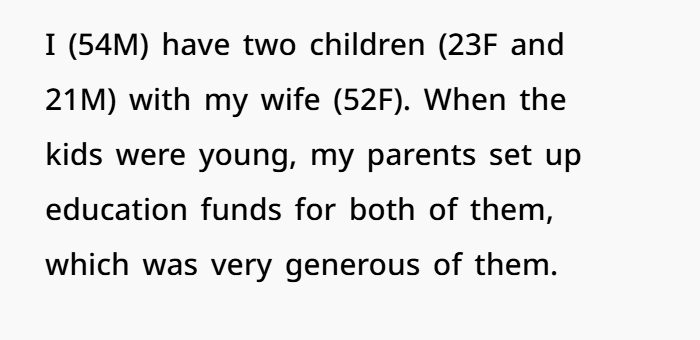
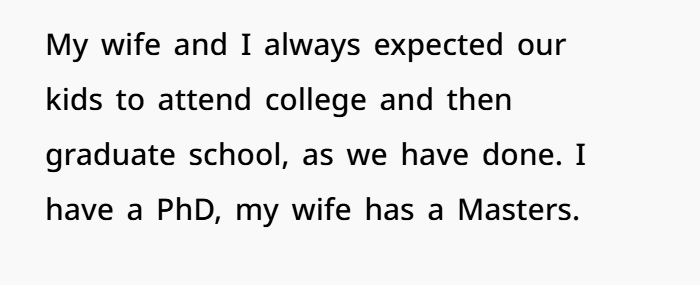
A 54-year-old father sparked a major family dispute after revealing that he and his wife had access to education funds created by his parents for both of their children but chose to use them differently. The couple, both highly educated professionals, always expected their children to pursue advanced degrees. Because of this expectation, they decided not to use either child’s education fund for undergraduate studies and kept the existence of the accounts hidden from their children.
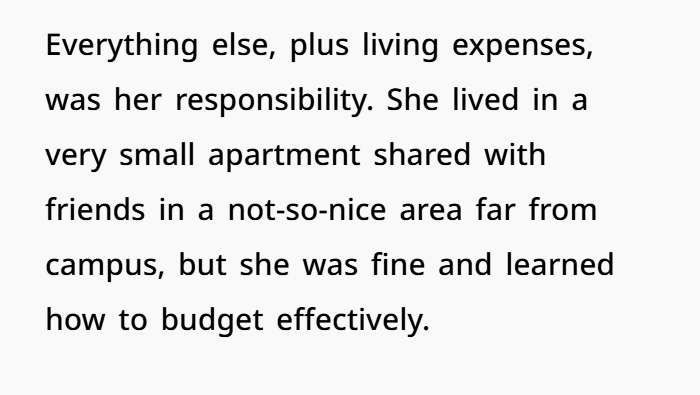
The conflict began when their daughter, a 23-year-old liberal arts graduate who studied music and film, discovered that her 21-year-old brother was receiving financial support from his education fund. Unlike her brother, who pursued engineering and had fewer scholarships, she had worked hard to minimize expenses, living modestly and managing her own costs while completing college. After learning that her parents had a dedicated fund for her but had intentionally withheld it, she questioned why the money was unavailable to her after graduation.


The parents argued that the money was not technically their daughter’s property because it came from her grandparents and had originally been intended for education-related expenses. They also explained that withdrawing the money for other purposes could result in penalties and that unused funds could return to the grandparents. However, their daughter’s emotional withdrawal and refusal to answer calls suggested that the issue was not only financial but also connected to feelings of unequal treatment, trust, and perceived favoritism between siblings.
The situation highlights a broader debate surrounding education savings accounts, parental financial control, family expectations, and whether parents should have the authority to redirect funds intended for their children. While the parents viewed their decision as responsible financial planning, many observers argued that withholding information about a child’s dedicated education fund while using the sibling’s fund created an imbalance that damaged trust.
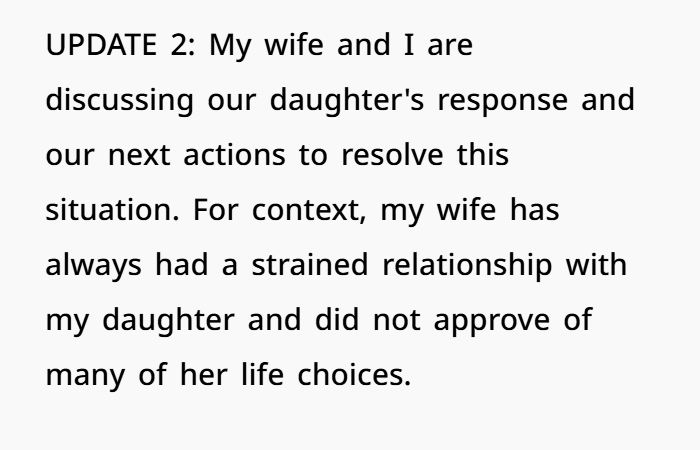
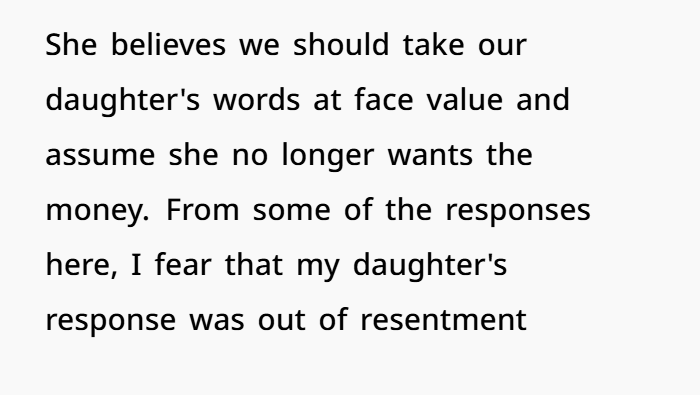
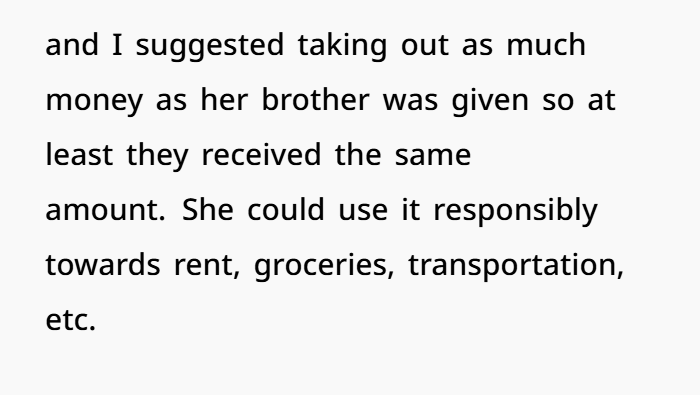
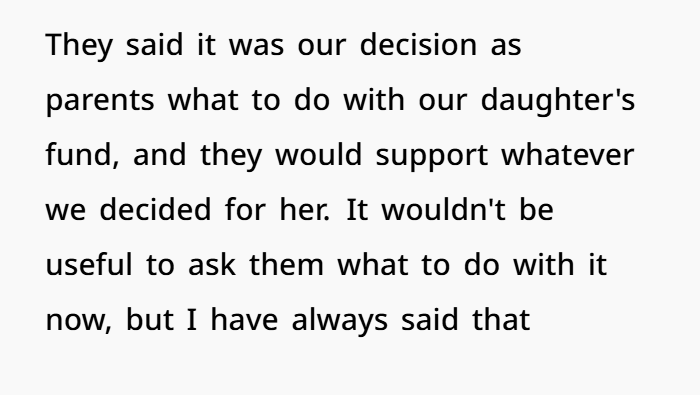
A father shared a popular post on the AITA subreddit, asking if he and his wife were wrong for refusing to give their daughter access to her education fund unless she decides to attend graduate school.
He wrote:








Education savings are usually created to help children handle the cost of higher education. In many families, these funds are seen as money set aside specifically for a child’s future, not just as a parent’s personal savings.
For example, in the United States, accounts like 529 college savings plans are made for education-related costs such as tuition, fees, books, and some housing expenses. But in this situation, the bigger question is not just who legally controls the money. It is about how the decision made the daughter feel and whether she believed she was treated differently from her sibling.
Family experts have found that when children feel a parent favors one sibling over another, it can hurt relationships. The amount of money is not always the main issue. Often, what matters most is whether a person feels they received the same support, chances, and care as their brother or sister.
From the parents’ point of view, their original plan made sense. They wanted to save the education fund in case their daughter decided to attend graduate school. Many parents see advanced education as an investment that can lead to better career opportunities.
Higher education can improve earning potential, but the financial benefits depend on many things, including the career field, school, and job market. Some degrees may lead to higher salaries, while others may provide value in different ways, such as personal growth or job satisfaction.
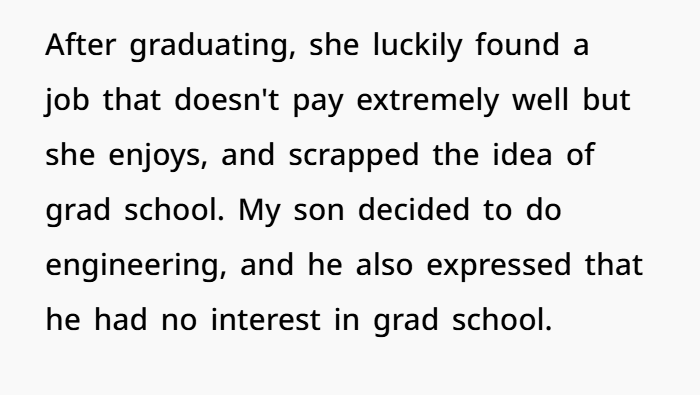
The situation became more complicated because the parents handled their children’s education funds differently. Their son decided not to attend graduate school, and the parents allowed him to use his education savings for college costs and living expenses.
Their daughter also finished college and found a job, but she was still being told she could not access her own education fund unless she followed a different path. This difference is what caused many people to question the parents’ decision.
The debate also connects to a larger issue many families face: what does “fair” really mean? Treating children equally does not always mean spending the exact same amount on each child. Different children may have different needs. One child may need expensive tools for a certain career, while another may have different expenses.
However, experts often say that clear communication matters. When parents make financial decisions without explaining them, children may feel hurt or ignored, especially if they discover the difference later.
Similar problems can happen with family inheritance and long-term financial planning. Experts often recommend that parents clearly explain their choices to avoid misunderstandings and future conflicts between family members.
The daughter’s reaction also shows that the disagreement was about more than money. When she said she did not care and suggested giving the money to another grandchild, it may have been a way of showing how disappointed she felt.
Sometimes, when people feel rejected or judged, they stop asking for what they want because the emotional pain feels bigger than the benefit they would receive.
Another part of the disagreement was the difference between the children’s career choices. The son chose engineering, while the daughter followed creative fields. Many studies on career satisfaction show that enjoying your work and using your personal strengths can play a big role in long-term happiness, even if different careers have different income levels.
At the heart of the argument, both sides have different ideas about fairness.
The parents saw fairness as using the money for what they believed would create the biggest future benefit.
The daughter saw fairness as having equal access to a fund that was saved for her education.
Her brother’s situation made the issue harder because it showed that the parents were willing to provide support when they agreed with the educational choice.
A possible way forward would be to separate the money issue from the relationship issue. Even if changing the fund’s purpose creates financial problems or requires approval from other family members, recognizing the daughter’s effort and respecting the choices she made could help repair the relationship.
In many families, money represents more than just dollars. It can also represent love, trust, approval, and support. In this case, the education fund became a symbol of how the daughter felt her parents viewed her choices.
People had a LOT of thoughts about this one.
Dinosaur_Doctor wrote:

ugh0000000 wrote:


After being thoroughly eviscerated, OP jumped on with a few updates.