AITA for exposing my husband’s affair at his sister’s wedding after his family called me a gold digger?
A woman from a simple background spent years feeling like an outsider after marrying into a wealthy family. Her husband’s relatives often reminded her that she didn’t come from the same world as them.
For years, she dealt with hurtful comments about her past. They accused her of marrying for money and tried to make her feel less important in the family. Her husband kept telling her that his family would eventually accept her, but nothing really changed.


Things reached a breaking point when her sister-in-law wanted to use their historic estate for her wedding. Instead of letting the family use the property for free, the woman asked for a proper venue agreement and charged a $20,000 rental fee.
The family called her greedy, but they still signed the contract. On the wedding day, however, she found security footage that revealed her husband and sister-in-law had been having an affair for months inside the guest house.
During the wedding ceremony, she decided to reveal the truth in front of everyone. She showed the evidence, confronted them, and had security remove the family from the property.
Some people believed her actions were understandable after years of disrespect and betrayal. Others felt that exposing the affair during a wedding went too far.
The situation brings up difficult questions about cheating, trust, family conflicts, property rights, revenge, and how years of emotional pain can affect the way people respond when they finally reach their breaking point.
I was treated like an outsider for years after marrying into a wealthy family. My husband’s relatives always reminded me that I came from a different background. They made comments about my childhood, questioned if I was only after their money, and never truly accepted me.
My husband came from an old-money family, while I grew up with very little. At our wedding, his mother told me I looked “surprisingly elegant for someone with your background.” His father asked if I had ever even been inside a country club. His sister called me a charity case.
I stayed quiet for eight years because my husband kept saying his family would eventually change.
They never did.
Three months ago, my sister-in-law got engaged and wanted a garden wedding. My husband and I own a five-acre property with a restored Victorian house that his grandmother left to him. His family immediately assumed they could hold the wedding there.
His mother called me and said they would be having the wedding at our place. She even said she would send me the vendor list.
I told her no.
She couldn’t believe it. She said the property belonged to the family and that it was left to her son, not me.
I ended the call.
When my husband came home, he was angry that I had embarrassed his mother.
I told him if they wanted to use the property, they could pay for it.
I asked for $20,000, the same amount a wedding venue could charge, along with a written agreement and deposit.
My husband called me crazy. His father accused me of being a gold digger. His mother said I was proving why I would never truly belong.
But my sister-in-law had no other option because her dream venue was already booked. She paid the money herself, and we signed a proper contract with security rules, damage terms, and other conditions.
I hired my own security team and made sure everything was handled professionally.
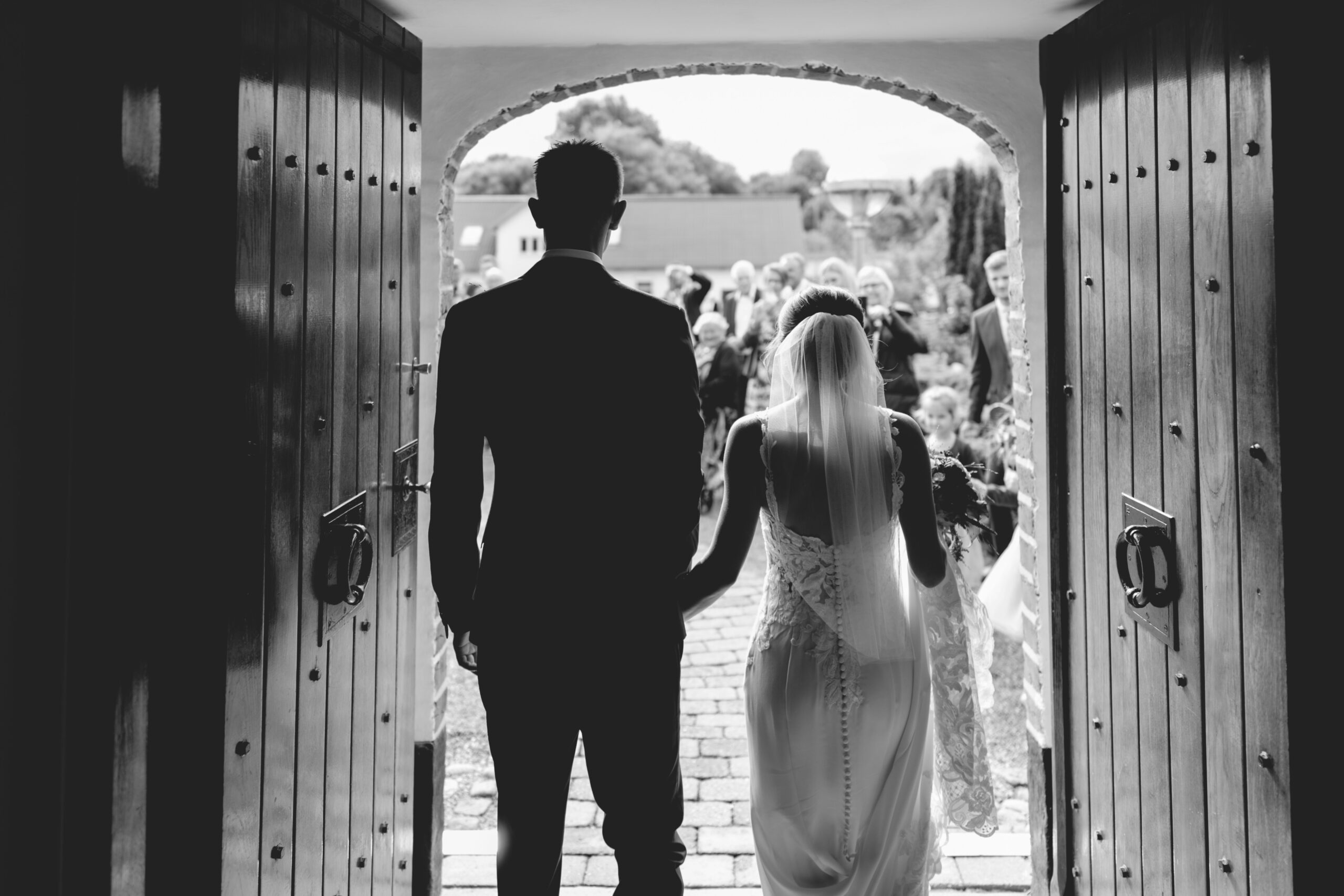
The wedding day looked perfect. There were seventy guests, white chairs on the lawn, and a string quartet playing. My sister-in-law looked happy walking down the aisle with my husband because her father had passed away years earlier.
Then I noticed something strange.
The way my husband held her. The way they looked at each other. It didn’t feel like a normal family relationship.
I checked the security footage from cameras I had installed two months earlier. My husband had complained about them, but I wanted to protect the property.
The footage showed my husband going into the guest house the night before the wedding. Twenty minutes later, my sister-in-law followed him. They came out together the next morning.
I looked through older recordings and found more footage from the past few months.
They had been having an affair.
During the ceremony, when the officiant said, “speak now or forever hold your peace,” I walked forward.
“I object.”
Everyone turned around. My sister-in-law looked shocked. My husband asked what I was doing.
I held up my phone and told everyone I had proof of what they had been doing in our guest house.
The entire place went silent.
His mother tried to take my phone, but I stepped back.
I called security and asked them to remove the family from the property. I reminded them that they had signed a contract and that the rules had been broken.
My sister-in-law cried and said I couldn’t do this.
I told her they had ten minutes to leave.
My husband tried to stop me, but security stepped in. His father threatened legal action, but I told him everything was recorded and the agreement had been signed.
They all left.
The groom looked completely shocked. I apologized to him and gave him the contact information of a good lawyer.
Since then, my husband has been calling nonstop. His mother says I destroyed the family. His sister says I was cruel and only wanted revenge.
They are threatening to sue, but my lawyer believes the contract protects me.
I kept the $20,000. I’m keeping the house. I also filed for divorce, and the footage is part of my evidence.
My best friend says I was justified but thinks I should have handled it privately. My brother says I did what they deserved. My therapist says I might be dealing with years of hurt by seeking revenge.
But the truth is, I don’t feel guilty. I feel free.
For years, they made me feel like I didn’t belong in their world. Maybe they were right, because after everything they did, I don’t think their world was worth joining.
So, AITA for exposing my sister-in-law’s affair with my husband at her wedding after his family called me a gold digger?
The Emotional Impact of Years of Family Rejection and Hurtful Treatment
This story is not just about an affair. It is also about years of feeling rejected, judged, and pushed aside by a family that never fully accepted her.
Research on family relationships shows that repeated criticism and exclusion can create long-term emotional stress. When someone feels like they must accept disrespect just to keep a relationship together, it can slowly affect their confidence and mental well-being.
Psychologists describe this kind of experience as a pattern where a person’s feelings are ignored or treated as unimportant. Constant insults, negative comments about someone’s background, or making them feel “less than” can lead to low self-esteem and loneliness.
The American Psychological Association has noted that emotional abuse in close relationships can affect mental health, including increasing anxiety, depression symptoms, and problems with trust.
In this situation, being called a “charity case” or a “gold digger” created a clear power imbalance. The family’s wealth became a way to make her feel like she had to earn her place and prove she belonged.
Infidelity, Broken Trust, and the End of a Marriage
The biggest betrayal in the story is the alleged affair between the husband and his sister-in-law. Cheating is often seen by relationship experts as one of the most painful experiences in a marriage because it breaks the trust and commitment partners expect from each other.
Studies in relationship psychology show that betrayal can lead to strong emotional reactions, such as anger, confusion, stress, and difficulty trusting again. The hurt is not only about losing the relationship but also about feeling like the reality someone believed in was taken away.
Research shared through the National Library of Medicine shows that infidelity is a major reason many marriages end because it damages the emotional safety and trust needed for a healthy partnership.
In this case, discovering that the affair allegedly continued for months could make the pain even worse. It was not just one bad choice but a repeated pattern of dishonesty.
Can Someone Remove Guests From a Wedding on Their Property?
The legal side of the wedding property situation is more complicated than the family drama.
Property owners usually have the right to control who uses their land, especially when guests are there under a written agreement. Wedding venues often use contracts that explain rules about:
- Damage to the property
- Guest behavior
- Security plans
- Cancellations
- Activities that are not allowed
A clear rental agreement can help protect a property owner by setting expectations before the event takes place.
However, a rule about “immoral behavior” or cheating may not always be legally enforceable. It depends on local laws and whether the contract terms are considered reasonable and clear.
A valid contract usually requires:
- An agreement between both sides
- Something of value being exchanged, such as payment
- Both parties accepting the terms
- A legal purpose
Creating a formal agreement and collecting payment would generally give the property owner more protection than simply allowing family members to use the location without rules.
According to the Cornell Law School Legal Information Institute, contracts are based on agreements between people that create legal responsibilities.
Could Revealing the Affair Publicly Cause Legal Trouble?
Sharing the affair during the wedding also raises legal and ethical questions.
In many places, revealing truthful information is usually different from spreading false claims. However, problems can happen if private information is shared illegally, recordings are made without permission, or accusations are not true.
Privacy laws can vary depending on where someone lives. Rules about security cameras and audio recordings are especially different from one location to another. Some places require consent for recordings, while others have different rules.
Organizations like the Electronic Frontier Foundation have discussed how surveillance and privacy laws can change depending on location and recording methods.
If the security footage was legally collected and the information was accurate, her position would likely be stronger. But if the recordings broke privacy laws, the situation could become more complicated.
Betrayal, Revenge, and Public Exposure
Stories about exposing affairs often create strong reactions because they mix private relationship problems with public embarrassment.
Relationship experts often separate accountability from revenge. Accountability is about protecting yourself, setting boundaries, and making sure important people know the truth. Revenge is usually about causing pain to someone who hurt you.
People supporting the woman may believe the groom had a right to know before marrying someone who allegedly betrayed him. Others may feel that revealing everything during the ceremony turned a private issue into a public punishment.
Research on revenge suggests that getting even can sometimes bring temporary relief, but healing often requires dealing with the emotional pain behind the anger.
Some studies in social psychology suggest that revenge may feel satisfying at first but can also keep people emotionally connected to the person who hurt them.
asamue16
👏🏾👏🏾👏🏾👏🏾👏🏾👏🏾👏🏾👏🏾👏🏾👏🏾 Kudos to you! That was amazing to read. I’m glad you stood up for yourself once you found out what was really happening instead of ignoring it or making excuses.
I hope you get everything you deserve and that he gets nothing. I hope the rest of your life is filled with happiness, peace, and amazing experiences.
Don’t forget to use some of that money to do something you’ve always wanted to do for yourself. Wishing you the best of luck!
Negative-Bottle-776
How was the father, who passed away years ago, present at the wedding?
NeighborhoodLower389
Wow, what a piece of trash writing, even for AI.
Inherited property belongs to the person who receives it. It does not automatically belong to their spouse, children, or anyone else.
Because of that, OP would not have had the right to create a contract for the use of the property.
On a scale of 1 to 10, this was a -5.