Woman refuses to put dying FIL in hospice, son says, ‘not your dad, not your choice.’

A painful family disagreement happened when a woman and her brother-in-law had different views about how their elderly father should spend his last days.
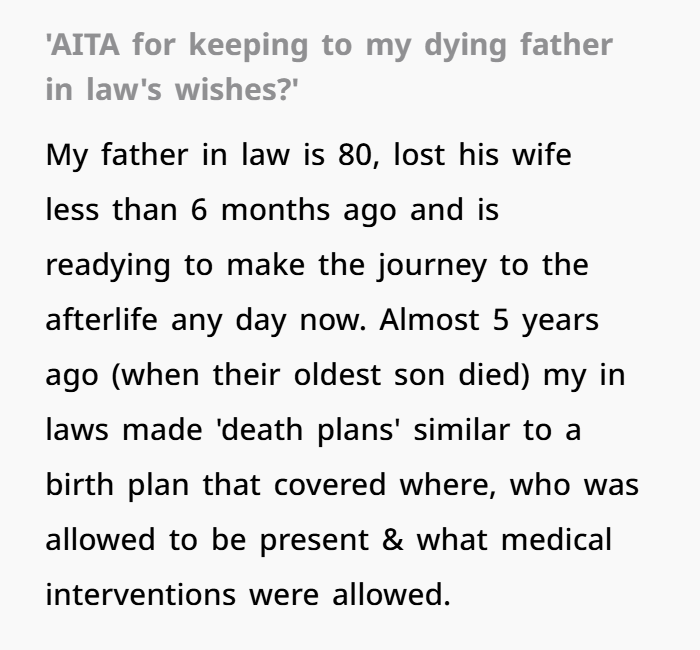
The 80-year-old man had already lost his wife and knew his life was coming to an end. Years earlier, he had made a detailed end-of-life plan explaining what he wanted for his final days.


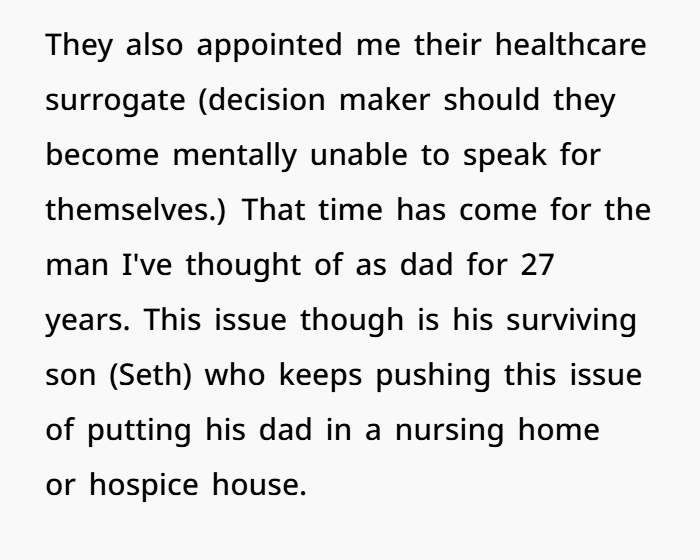
He wrote down his wishes about medical care, where he wanted to pass away, who he wanted around him, and which treatments he did or did not want. He also legally named his daughter-in-law as his healthcare surrogate, trusting her to make decisions if he could no longer speak for himself.
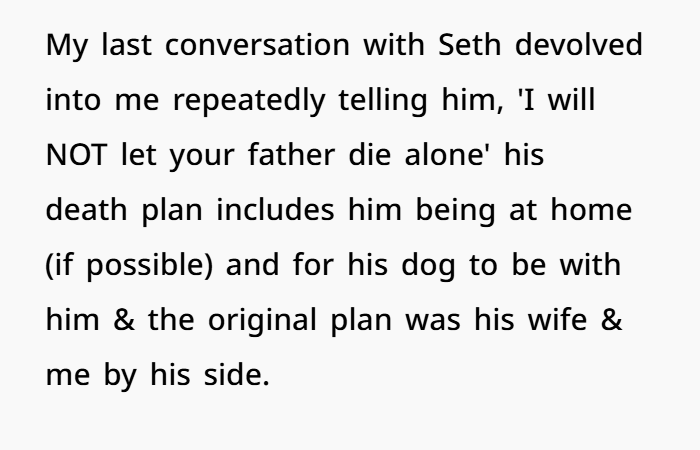
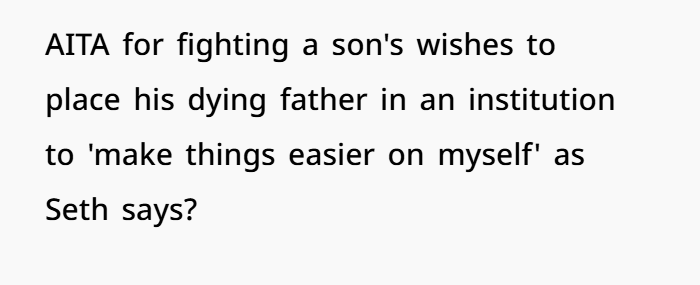
The conflict started when his son, Seth, wanted to move his father into a nursing home or hospice facility. Seth believed professional care would make things easier and give his father the support he needed.
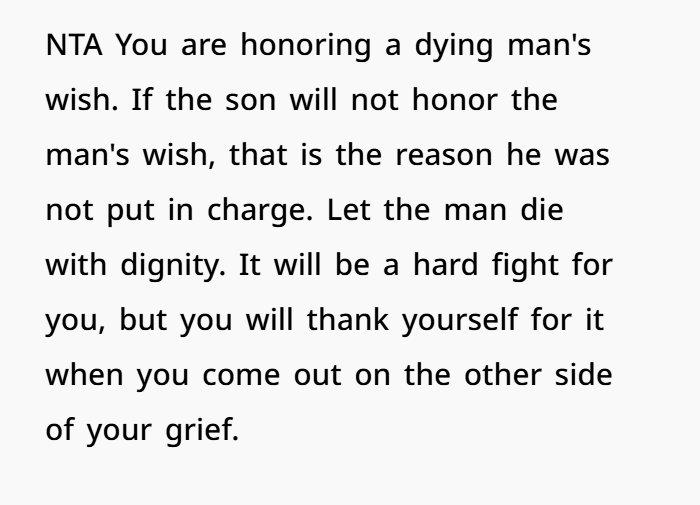
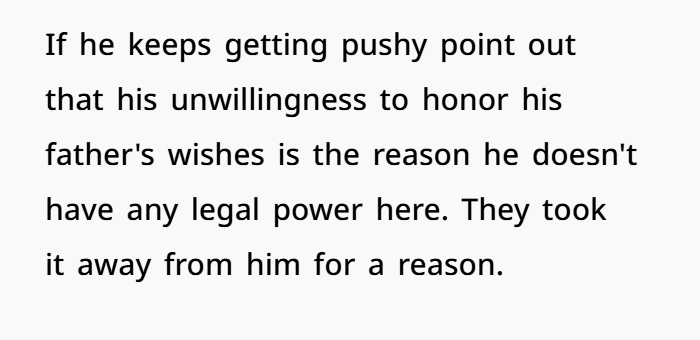
But his daughter-in-law saw things differently. She felt that following his wishes mattered more than choosing the easier option.
She said his plan was very clear. He wanted to stay at home, surrounded by familiar faces, with his beloved dog close by. He did not want to spend his final moments in an unfamiliar place.
This family dispute reflects a much bigger conversation about elder care, medical power of attorney, end-of-life planning, and family responsibilities. While Seth believed a care facility was the most practical choice, others felt that a person’s own wishes should come first when decisions are made about their final days.
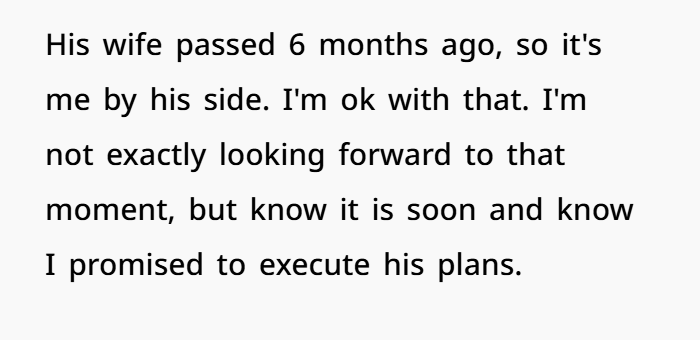
In the end, the elderly man passed away peacefully at home. His daughter-in-law, grandchildren, and dog were by his side, just as he had requested in his end-of-life plan.
Read more info on reddit
End-of-life decisions can become very difficult for families because they involve grief, emotions, medical choices, and legal responsibilities. When loved ones disagree, the biggest question is often whose wishes should guide the decision.
In many places, including the United States, the main idea behind these choices is patient autonomy. This means a person has the right to decide what kind of medical care and living arrangements they want, even if their family members have different opinions.
One of the best ways people can protect their wishes is by creating an advance healthcare directive, also known as a living will. These documents allow people to explain what treatments they want, what care they do not want, how they wish to manage pain, and where they would prefer to receive care if they can no longer communicate.
Research from the National Institute on Aging shows that advance care planning can help families avoid confusion during stressful moments. It also helps make sure medical decisions follow a person’s own values instead of being made quickly during a crisis.
In this situation, the elderly man did more than simply tell his family what he wanted. He created a legal plan and chose a healthcare surrogate to make decisions for him if he became unable to do so himself.
Rules about healthcare proxies can be different depending on where a person lives. However, a properly chosen healthcare agent usually has the authority to make medical decisions when someone cannot speak for themselves. Resources from AARP explain that these representatives are selected to keep the person’s own wishes at the center of care decisions.
The disagreement also points to a larger problem many families face with elder care. Conflicts can happen when one person handles most of the daily caregiving while another family member becomes involved mainly during major medical decisions.
Many unpaid family caregivers deal with stress, financial challenges, and disagreements about what is best for their loved one. These problems often become even stronger when a person is nearing the end of life.
The choice between home hospice care and a hospice facility can also be confusing. Hospice does not always mean moving into a special building. Many hospice programs allow patients to stay at home while receiving help from nurses, doctors, social workers, and trained caregivers.
Legal decisions about end-of-life care have also shown the importance of respecting a person’s documented wishes. A well-known case, Cruzan v. Director, Missouri Department of Health, involved the right of a person to refuse unwanted medical treatment. The case also showed why clear proof of a person’s wishes is important when they cannot speak for themselves.
Experts in medical ethics often talk about something called substituted judgment. This means a healthcare decision-maker should try to choose what the patient would have wanted, not what feels easiest or most comfortable for the family.
The family conflict in this story also raised questions about caregiving roles. Seth wanted his father to move into a care facility, but the daughter-in-law said he had not been heavily involved in daily care after his brother’s death. These types of disagreements can become more painful when family members have different levels of involvement but still want a say in important choices.
At the heart of the issue was not just a debate about nursing homes or hospice care. The bigger question was whether an elderly person’s own wishes should come first when family members disagree.
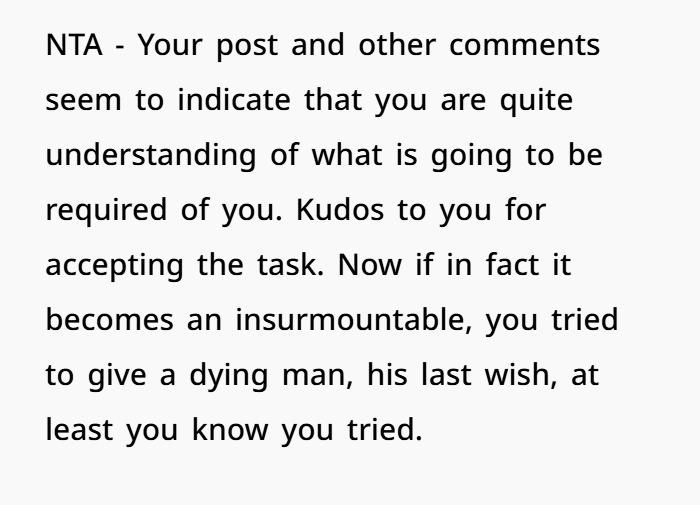
In this case, the father-in-law’s wishes were respected. He stayed at home, surrounded by people he loved and his dog by his side. His story shows why advance care planning, healthcare proxies, and end-of-life preparation have become such important parts of elder care today.
Let’s find out.
wynlydd writes:
fluffykins67 writes:

throwaway355 writes: