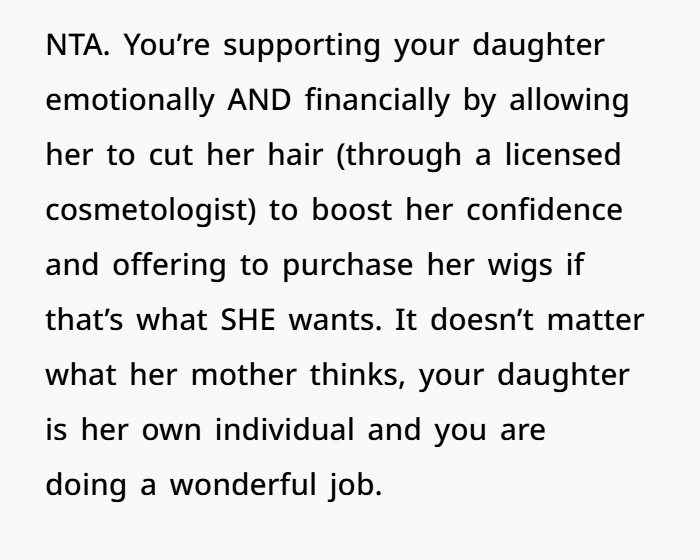
‘AITA for letting my daughter shave her head even though her mother didn’t want it?’
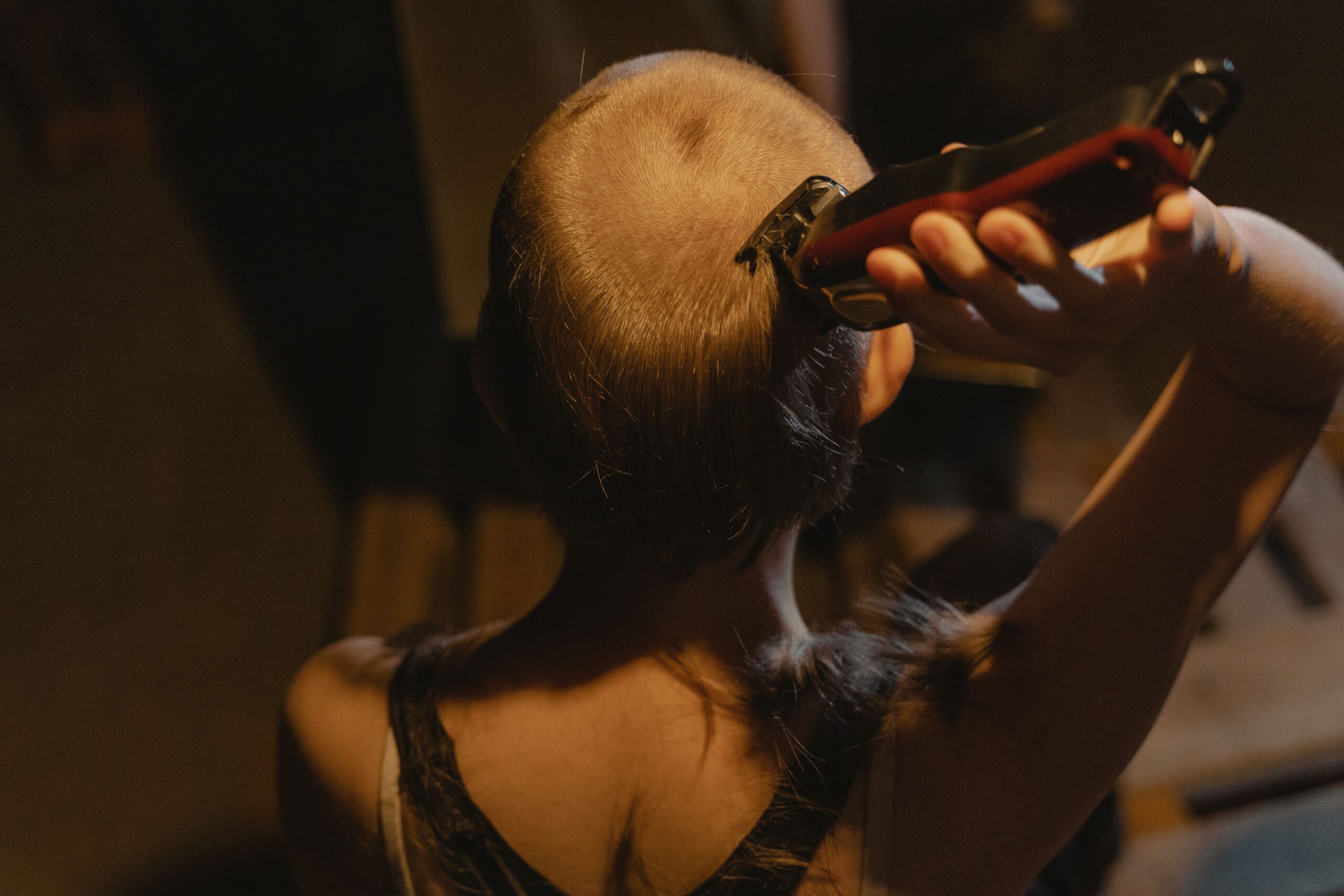
A 40-year-old divorced dad found himself in the middle of a parenting disagreement after he supported his 15-year-old daughter’s choice to shave her head.
The teenager had been losing a lot of hair because of a medical condition that doctors still have not diagnosed. She has more medical tests coming up to find out what is causing it. Watching so much of her hair fall out every day left her scared, upset, and emotionally drained.


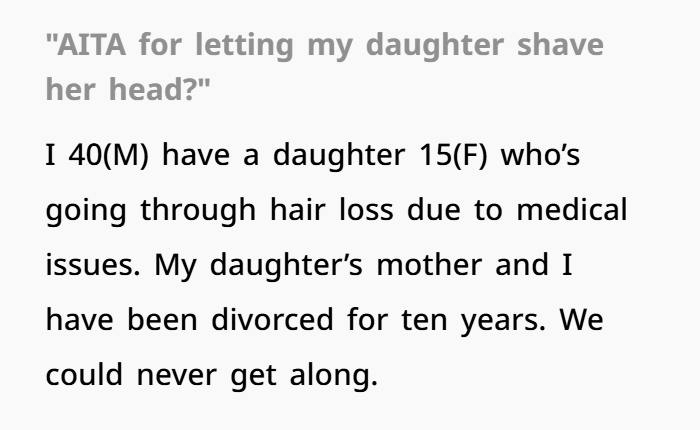
Instead of making her go through that stress any longer, her father respected her decision. He arranged for a licensed cosmetologist to shave her head, just as she wanted. He hoped it would help her feel more in control during a very difficult and uncertain time.
The decision did not go over well with the girl’s mother. She believed shaving her head would make her an easy target for bullies. She was also worried it would spoil the family’s Easter photos.
The father saw things differently. He believed his daughter’s emotional well-being was far more important than her appearance. He pointed out that the choice was completely hers, and if she ever wanted hair again, they could always buy a wig.
The disagreement has sparked a bigger conversation about parenting decisions, mental health, medical hair loss, body autonomy, and co-parenting after divorce. These are difficult issues, and many families dealing with serious health problems eventually face similar challenges.
more info on reddit
Hair Loss Can Affect More Than Just Appearance
Many people think hair loss is only a cosmetic problem. But doctors say it can also have a big effect on a person’s mental health, especially for teenagers.
The American Academy of Dermatology says sudden or heavy hair loss can happen for many reasons. These include alopecia areata, thyroid problems, autoimmune diseases, vitamin or mineral deficiencies, hormone changes, severe stress, and some medicines. That is why getting checked by a doctor as soon as possible is so important.
Teenagers are still growing and learning who they are. Losing their hair during this time can be especially hard. It can hurt their confidence, change how they see themselves, and leave them feeling upset or embarrassed.
Research from the National Institutes of Health (NIH) shows that people dealing with hair loss often have higher rates of anxiety, depression, low self-esteem, and social withdrawal.
Taking Back a Sense of Control
Mental health experts often talk about the importance of feeling in control during difficult situations.
When someone loses hair every day because of a medical condition, it can feel like they have no control at all. Choosing to shave the rest of their hair changes that. Instead of waiting for more hair to fall out each morning or worrying about it in public, they make the decision for themselves.
Counselors say this can help people regain a sense of control during a stressful medical experience.
That is one reason many people with cancer, those going through chemotherapy, and people living with alopecia decide to shave their heads before all of their hair falls out. Every situation is different, but many say making the choice themselves helped them feel less stressed.
The National Alopecia Areata Foundation (NAAF) also explains that letting people choose whether they want to wear a wig, hat, scarf, or shave their head can be an important part of coping with hair loss.
The Fear of Bullying Is Understandable
The mother’s worries about bullying are completely understandable. Sadly, school can be tough for teenagers who look different from their classmates.
At the same time, research shows that strong family support can make a huge difference. According to the Centers for Disease Control and Prevention (CDC), teenagers who feel supported at home are usually better able to handle bullying and other social challenges.
Because of that, experts suggest doing more than simply trying to avoid teasing. They encourage parents to help children build confidence, practice calm responses, stay in touch with school staff if needed, and remind them that their value is about much more than how they look.
Why Body Autonomy Is Important
Child development experts also say teenagers should be included in decisions about their own bodies whenever it is appropriate.
By age 15, many teens are mature enough to help make choices about their appearance, especially when those choices are connected to a medical condition.
The American Academy of Pediatrics encourages parents to include teenagers in healthcare decisions whenever possible. Doing this can build confidence, encourage responsibility, and help young people develop a healthier relationship with their doctors.
In this case, the daughter was not pushed into shaving her head. She brought up the idea herself, explained why she wanted to do it, and asked for the haircut. Supporting her choice is very different from forcing it on her.
Co-Parenting During a Medical Crisis
Medical problems can be even harder for families after a divorce. Co-parenting during a health scare often means putting personal feelings aside and focusing on what the child needs most.
Family therapists often recommend that parents keep disagreements between themselves instead of letting them become another source of stress for the child.
When conversations focus too much on appearance, such as worrying about family photos, a child may feel that looking “normal” matters more than feeling safe, supported, and understood.
Psychologists often encourage parents to remind children that:
- They are loved no matter what they look like.
- Their health and medical care come first.
- Hair may grow back, depending on the diagnosis.
- Wigs, scarves, hats, and other options are always available if they want them.
Simple messages like these can bring comfort during a very uncertain time.
Finding the Cause Comes First
Right now, the most important thing is finding out why the hair loss is happening.
Doctors say rapid hair loss can have many different causes, and many of them can be treated. That is why proper medical testing is so important before anyone jumps to conclusions.
The Mayo Clinic also explains that many hair loss conditions improve once the underlying medical problem is treated.
Looking Past the Hair
At its heart, this disagreement comes down to two different parenting views.
One parent worried about bullying and how others might see their daughter. The other focused on easing her emotional pain during a frightening medical situation.
Doctors and mental health experts generally agree that teenagers cope better when they feel supported, respected, and included in decisions about their own bodies.
Whether her hair grows back quickly or she needs long-term treatment, one message stood out. Her father wanted her to know that her value is not defined by her hairstyle.
As conversations about co-parenting, adolescent mental health, medical hair loss, emotional well-being, pediatric healthcare, and family decision-making continue, this story is a reminder that kindness, understanding, and emotional support can be just as important as medical treatment.
Here’s what people had to say to OP:
laci6242 wrote:
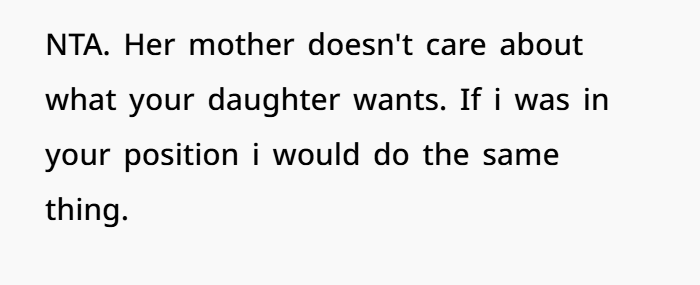
SoftTelevision6329 wrote: