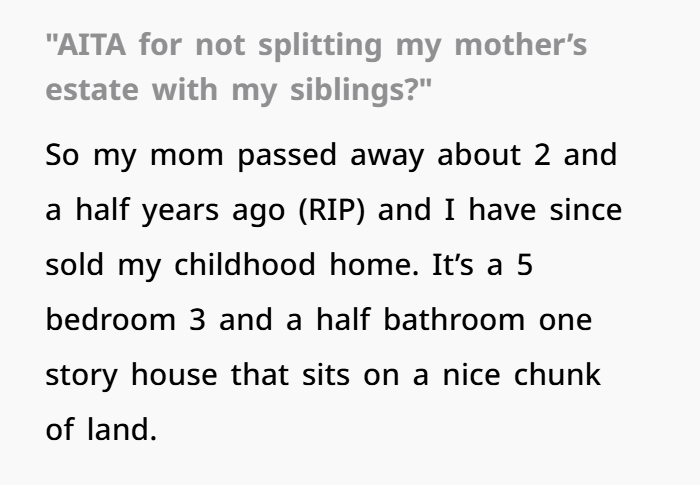
‘AITA for not splitting my mother’s estate with my siblings?’

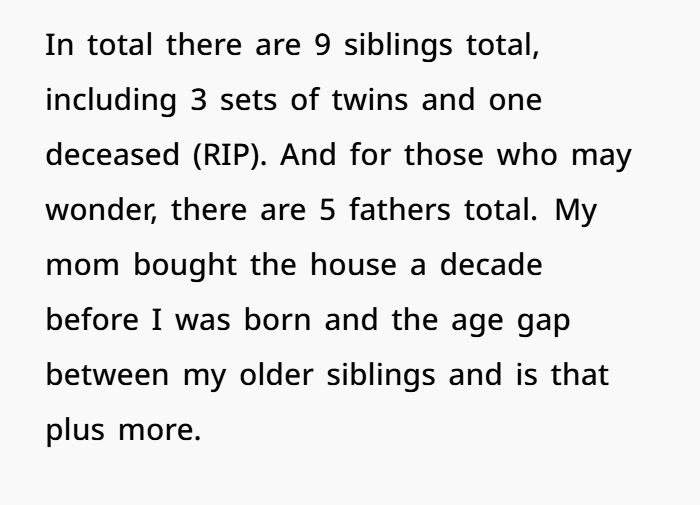
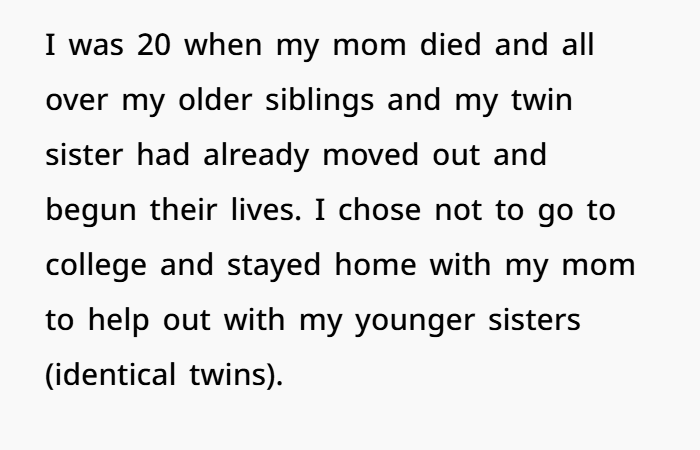
When their mother passed away, a 20-year-old suddenly found themselves dealing with a difficult family situation. They were left with a childhood home, nine siblings, different family backgrounds, and years of unresolved issues that had never really been talked about.
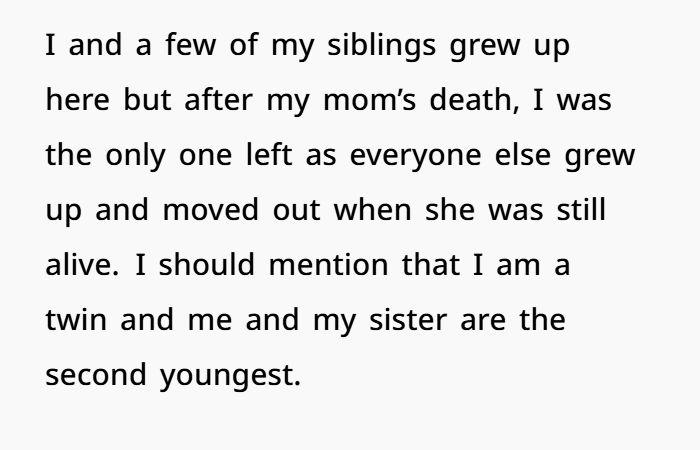
Most of the older siblings had already left home and started their own lives. But the youngest children stayed connected to the house. The narrator remained there to help care for their mother and younger sisters, taking on the daily responsibilities while many of their siblings were no longer involved.


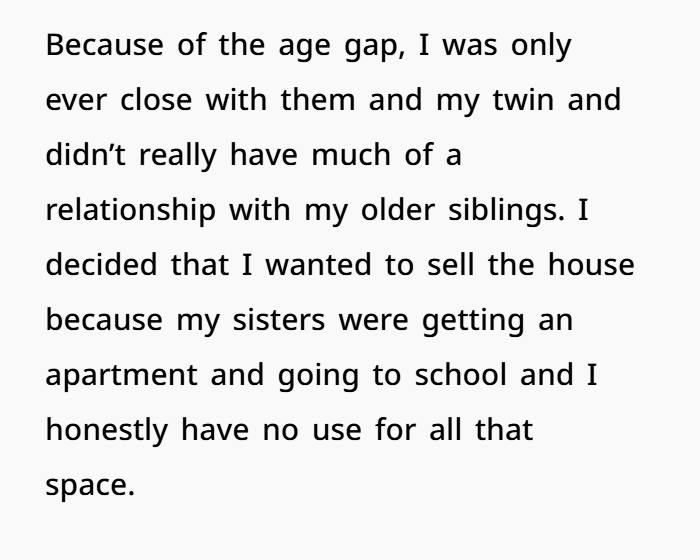
After their mother’s death, the narrator became the only sibling still living in the five-bedroom family house. Since their younger sisters were planning to leave for school and the narrator no longer needed such a large home, they decided it was time to sell the property.
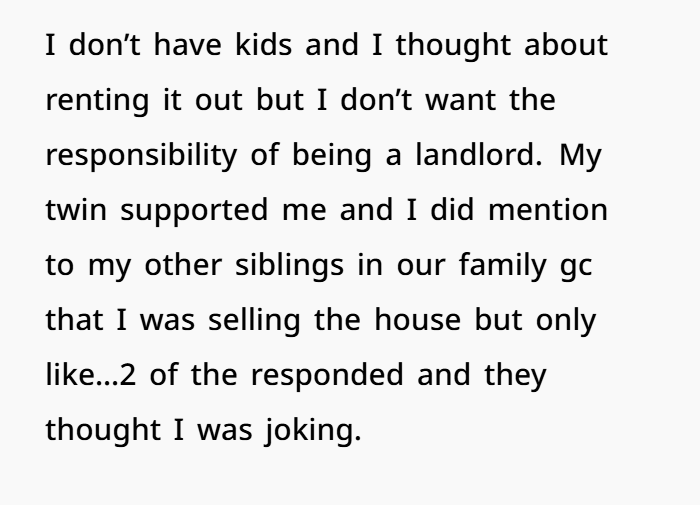
They shared the decision in the family group chat. However, only a few siblings replied, and some even thought the message was a joke. Because there was little response or interest from the family, the sale continued without much further discussion.
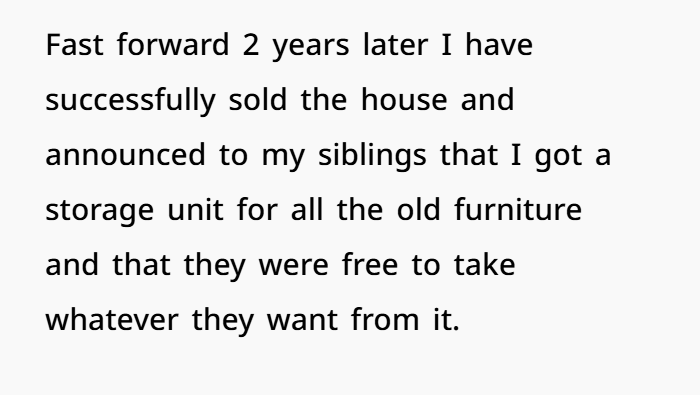
Two years later, the house had been sold successfully. Before clearing out the remaining furniture, the narrator gave their siblings a chance to collect any personal or sentimental items they wanted to keep.
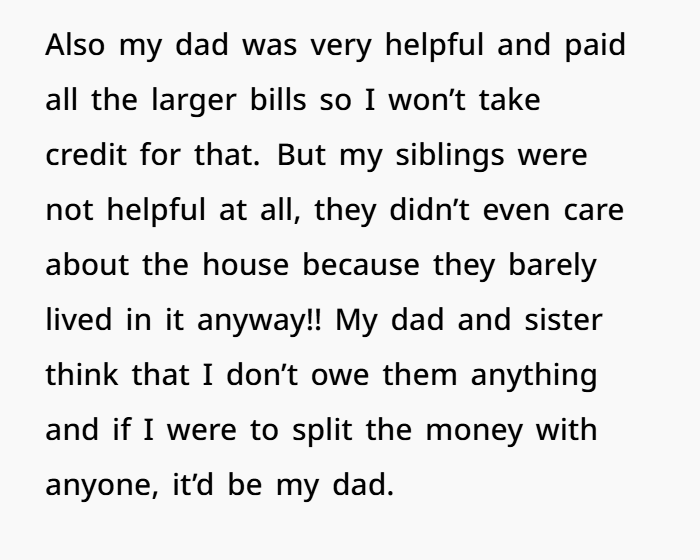
Instead of being thankful, several siblings became angry. They argued that the house belonged to their mother’s estate and that the money from the sale should have been shared between all the children.
The disagreement quickly became a bigger family conflict. It brought up difficult questions about inheritance, estate planning, legal ownership, and whether family members who were not involved in caring for or maintaining a property should still receive a share of its value.
More info on reddit


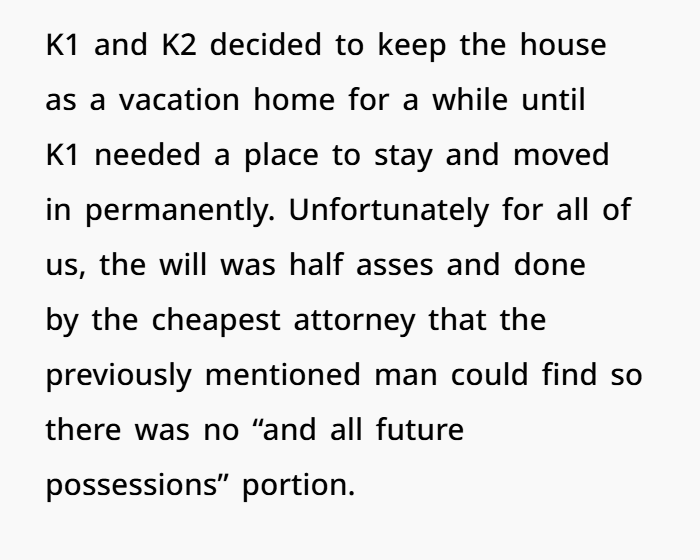
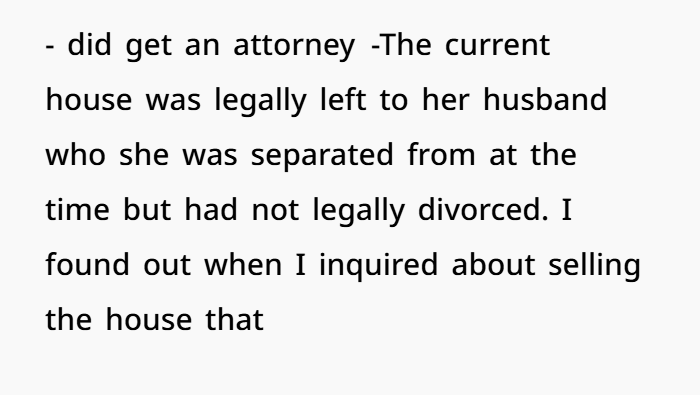
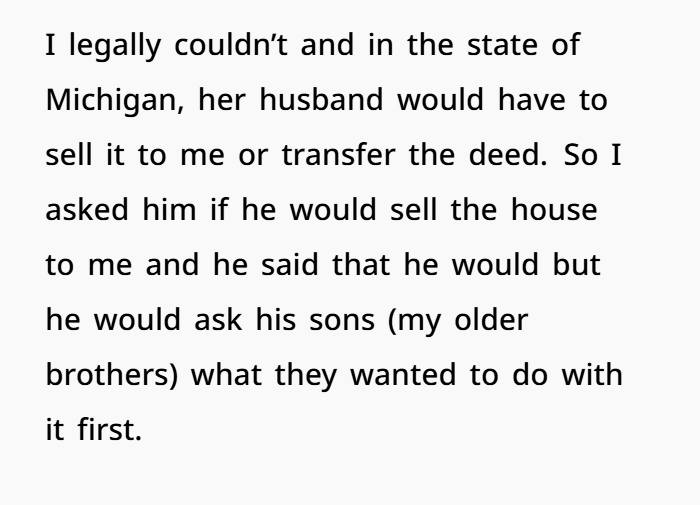

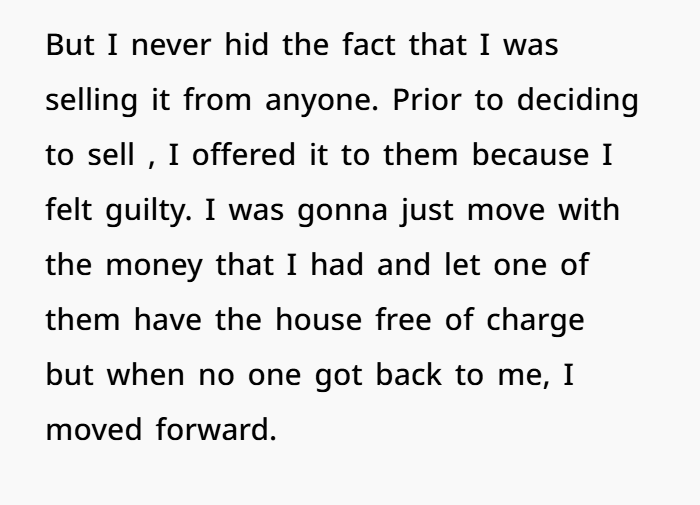


Inheritance fights can become messy when family feelings and legal ownership do not match. Many people believe a childhood home should automatically be shared equally among all children because everyone has memories there. But the law usually does not work that way.
Property ownership depends on things like the name on the deed, the probate process, a valid will, marriage status, and state inheritance laws.
The biggest question in situations like this is not simply who grew up in the house. The real question is who had a legal right to the property.
Under estate planning and probate law, a person’s belongings are usually passed on according to their will or other legal documents. If someone dies without a valid will, state intestate succession laws decide who receives the assets. These rules can be very different from one state to another, which is why many families turn to an estate planning attorney after losing a loved one.
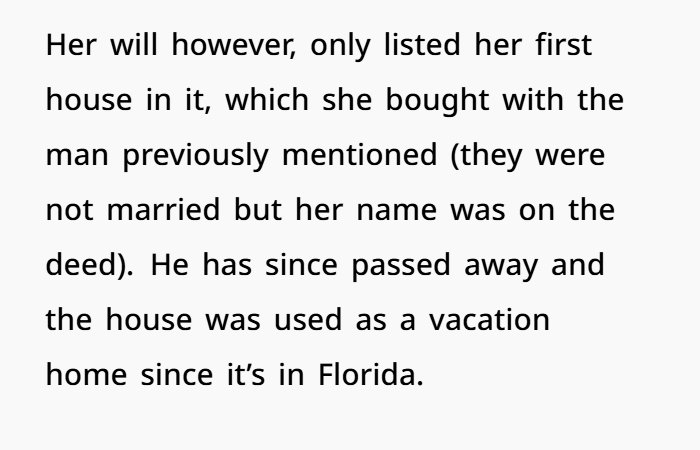
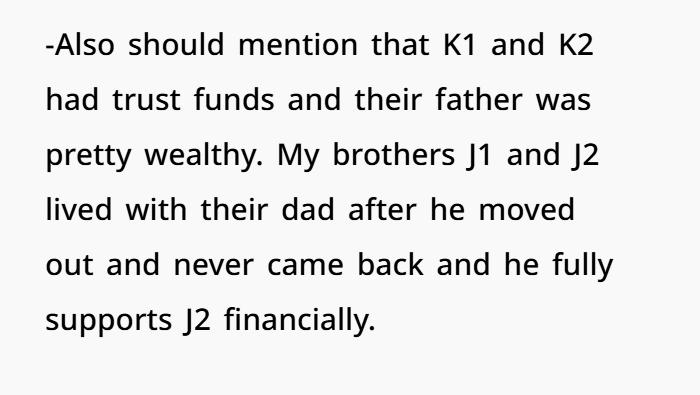
In this case, the fact that the mother’s home was legally connected to her husband changes things. In many states, including Michigan, a surviving spouse may have strong inheritance rights even if the person who died had children from another relationship.
Michigan inheritance laws consider several details, such as marriage status, children from previous relationships, and property ownership. These details can decide who has control over a home after someone passes away.
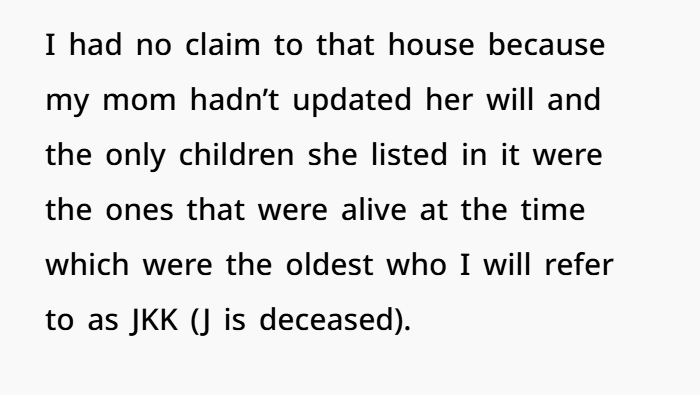
A major point in this situation is that the youngest child did not simply receive the house because she was the only child living there. The ownership had to be handled through the person who legally owned the property.
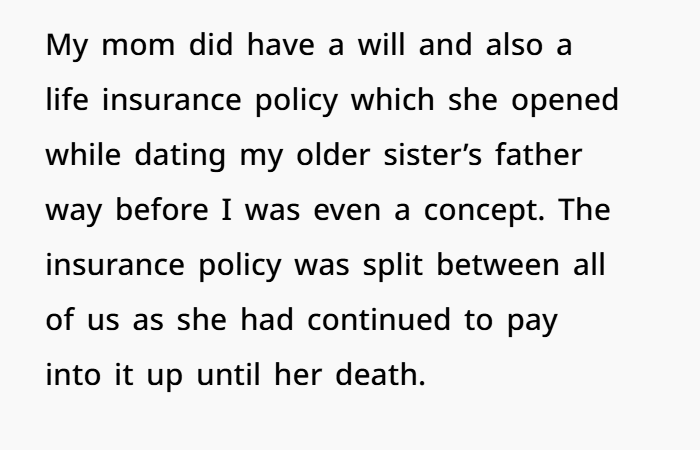
The child reportedly bought the home using money from her share of life insurance benefits. This matters because life insurance money is usually handled differently from other estate assets. In many cases, life insurance goes directly to the people named as beneficiaries instead of being divided through probate.
That is why estate planning experts often suggest checking life insurance beneficiaries separately from a will. The two things may not work the same way.
The siblings’ argument seems to focus more on what feels fair rather than what the law says is fair. Many family members believe a shared childhood home should belong to everyone because they have memories there.
They may feel that living in the home, growing up there, or sharing the same parent gives them a right to part of its value. But courts usually look at legal ownership, written agreements, and estate documents instead of emotional connections.
Another important part of this story is the role of the child who stayed in the home. In many families, one child remains nearby, helps with responsibilities, or provides care while other family members move away.
This can create strong feelings on both sides. The person who stayed may feel they gave years of time and effort, while others may feel left out of important family decisions.
Studies on family caregiving show that adult children who provide unpaid care often face financial and personal costs compared with relatives who are less involved.
Similar disagreements have happened in many inheritance cases involving family homes, unequal property shares, and caregiver responsibilities. Courts often find that having childhood memories in a house does not create ownership rights.
A sibling usually cannot claim part of a property just because they once lived there as a child. Legal ownership normally comes from being listed on the deed, being named in estate documents, or receiving rights through the probate process.
This situation also shows why proper estate planning matters. When wills are unclear or do not cover future property, families can end up in long disputes.
Estate planning professionals often recommend keeping wills updated, reviewing beneficiaries, creating trusts when needed, and making property ownership clear. These steps can help prevent probate problems and inheritance conflicts later.
Selling the property and using the money for things like education, housing, or personal growth is also different from wasting inherited money. In many cases, people who legally receive assets have the right to decide how to use them unless there are specific restrictions.
The main issue here seems to be less about whether the sale was legal and more about hurt feelings, poor communication, and different ideas about what the mother would have wanted.
In the end, the most important legal questions are simple: Who owned the property when it was sold? Was the sale completed correctly? Did anyone else have a legal claim to the home?
If the property transfer followed the proper legal process and the siblings had no ownership rights, the disagreement may be more of a family conflict than a valid inheritance claim.
Still, these fights can leave lasting damage. Inheritance disputes are rarely only about money. They often involve grief, old family tensions, and different ideas about what feels fair.
Here’s what people had to say to OP:
catladyclub said:
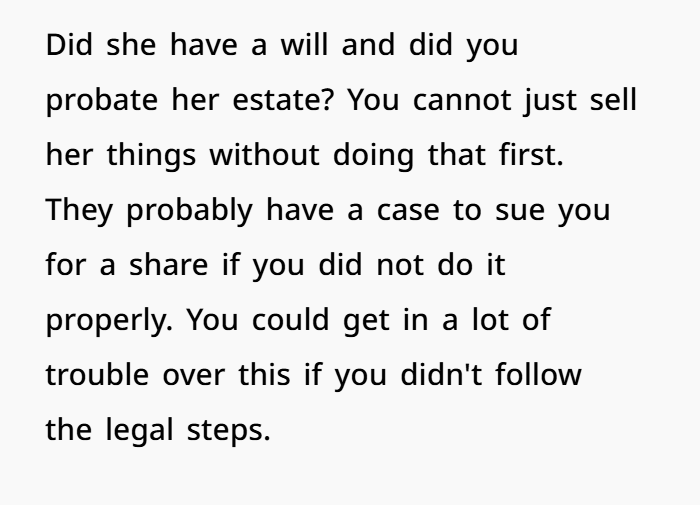
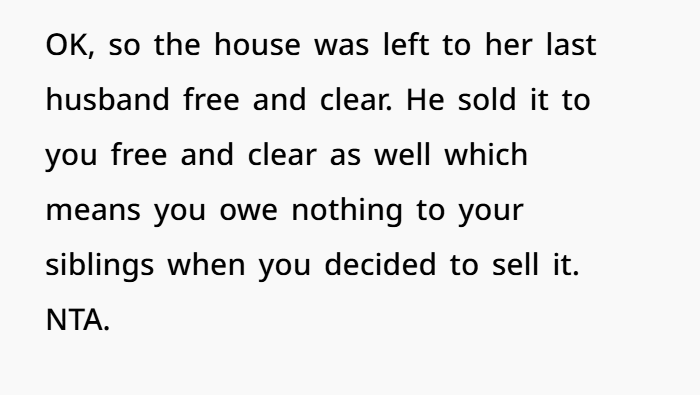
Lokiwifey76 said:

WinEquivalent4069 said: