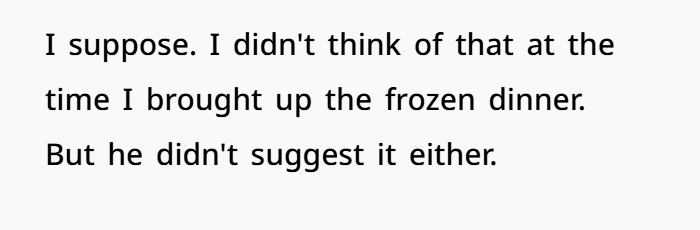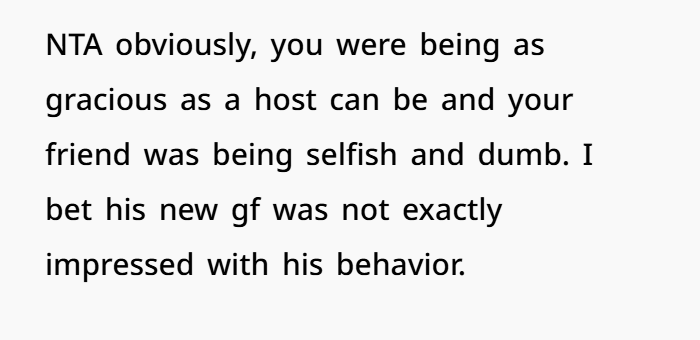
‘AITA for offering a frozen dinner to an uninvited guest at a dinner party?’
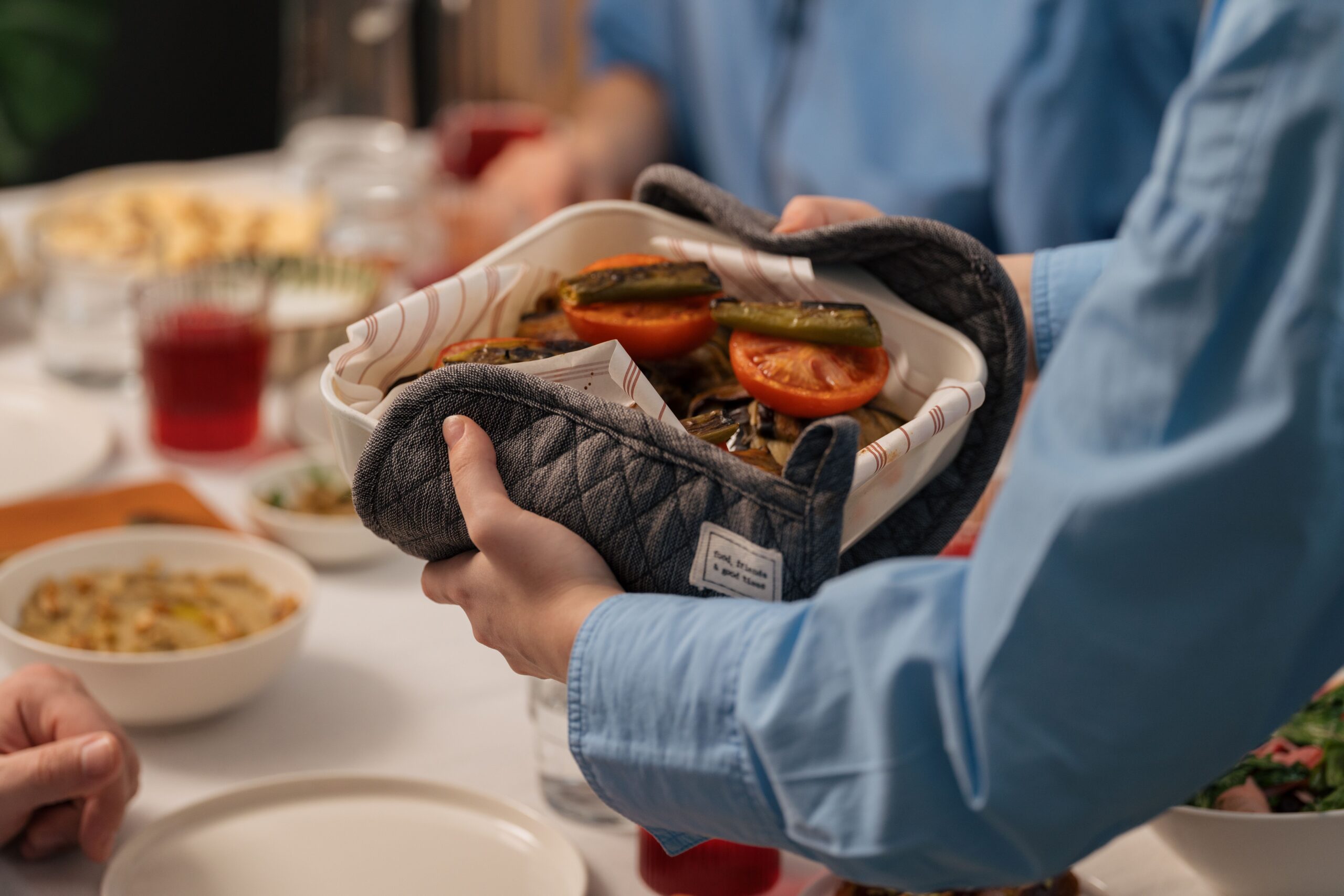
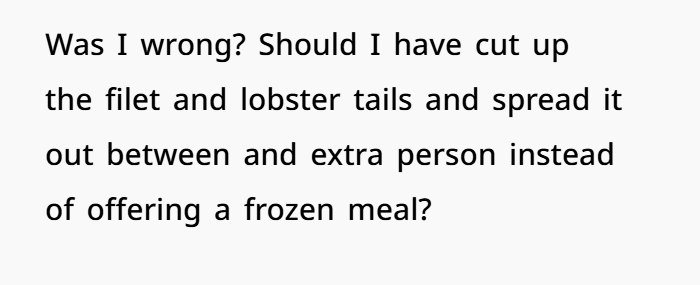
A dinner party that was carefully planned ended up becoming an uncomfortable situation when a host invited five longtime friends for a special evening. The menu included filet mignon, lobster tails, and homemade side dishes.
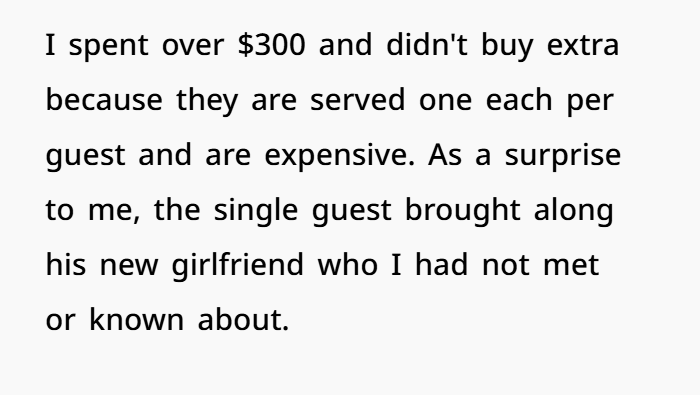
The host spent over $300 preparing the meal. Each guest had a set portion of the more expensive ingredients because the food was bought based on the confirmed number of people coming. The dinner was meant to be a small gathering with old friends who had known each other for around 15 years.


Things changed when one guest arrived with his new girlfriend. The host had never met her before and had no idea she was coming.
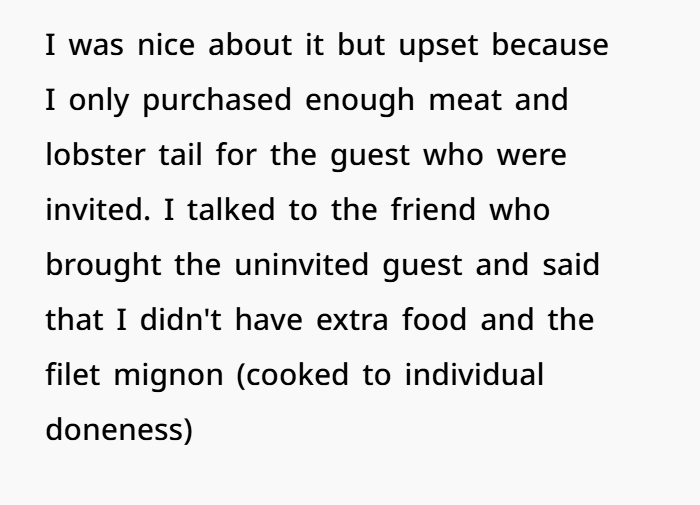
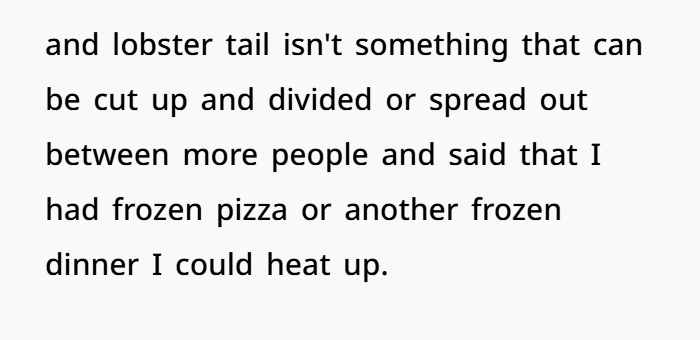
Trying to be polite, the host welcomed her but explained that there was not enough prepared food for another full serving. Since the filet mignon and lobster tails were bought and prepared individually, the host offered to make her a different meal from the freezer instead of cutting down everyone’s planned portions.
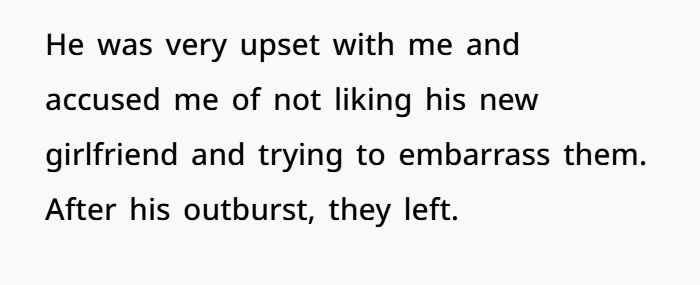
The guest did not take the offer well. He accused the host of trying to embarrass his girlfriend and said the situation made it seem like she was not being accepted.
The argument grew, and the couple decided to leave the dinner party. The situation brought up questions about dinner party manners, such as if hosts should always make room for unexpected guests and if guests should ask before bringing someone extra to a private gathering.
More info on reddit
Dinner parties usually come with an unspoken understanding between hosts and guests. The host provides a welcoming experience, and guests respect the time, effort, and money that went into planning the event.
In this situation, the real issue was not the frozen meal. It was about expectations, guest invitations, planning, and personal boundaries.
According to traditional etiquette rules, bringing an extra guest without asking first is usually seen as bad manners, especially for a private dinner. Hosts often plan the food, seating, and budget based on the number of people who confirm they are coming.
Many modern etiquette experts say that a plus-one should be requested, not assumed. A host may have limits with space, food, money, or other personal reasons that make extra guests difficult to handle.
Social research also shows that unexpected changes can create stress for people hosting events. Hosting often takes a lot of emotional and financial effort because people want their guests to have a good experience. When plans suddenly change, it can put extra pressure on the host.
The cost of the meal also matters in this case. This was not a simple buffet where more food could easily be added. Filet mignon and lobster are expensive foods often saved for special occasions. Adding another person could mean the host would have to make smaller portions for everyone else or spend more money on extra food.
This situation is also similar to how businesses handle reservations and supplies. Restaurants and event venues usually prepare based on confirmed numbers. Private hosts are not businesses, but the same idea applies because they also plan their resources around the guest list.
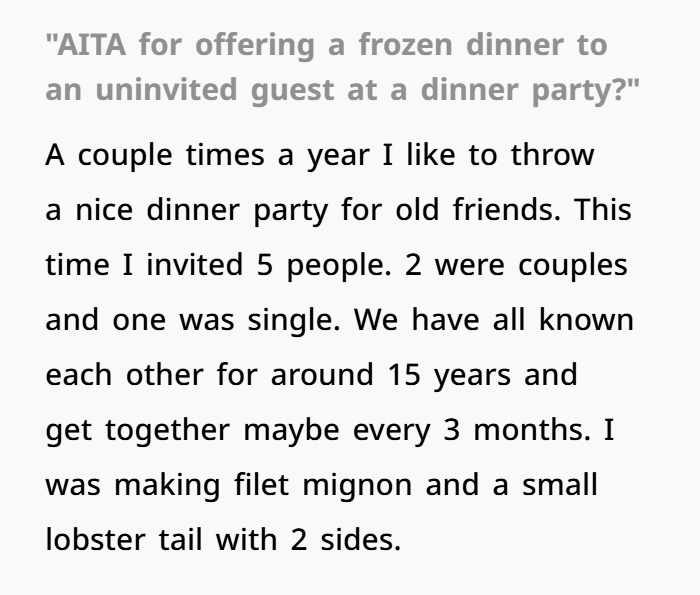
The disagreement seems to have grown because both people saw the situation in different ways. The host saw the frozen meal as a reasonable solution because there was not enough prepared food. The guest saw it as a sign that his girlfriend was being treated differently.
Psychology research about attribution shows that people sometimes take another person’s actions personally instead of considering the situation behind them. The guest may have felt that the host was rejecting his girlfriend, while the host was simply trying to manage a food shortage.
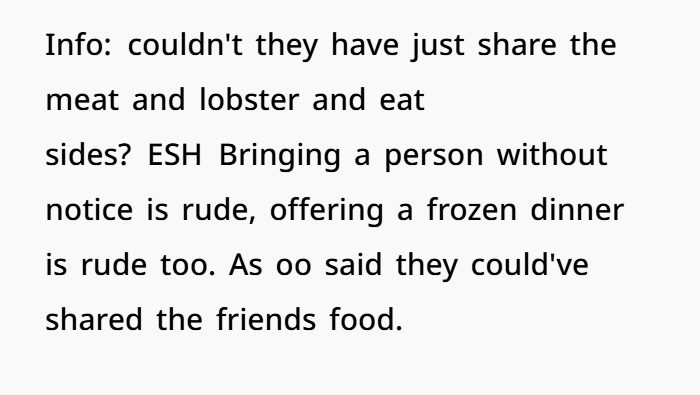
There was another possible way to handle the situation. The host could have allowed everyone to share the original meal by giving slightly smaller portions or adding more side dishes. Some hosts would choose this option to keep everyone eating the same food.
However, that choice would also mean changing the plan the host had carefully created. The host would have to give up the serving sizes and arrangement that were prepared ahead of time.
The guest’s reaction is also a key part of the situation. When someone brings a new partner into an established friend group, it helps to be considerate of everyone involved. Bringing a new person without telling the host takes away the chance to prepare properly.
A simple message before the dinner, asking if it was okay to bring a partner, could have avoided the entire problem.
The fact that the guest and his girlfriend were already arguing before arriving may have also affected the situation. Stress can make people more likely to misunderstand situations and react more strongly than they normally would.
Similar disagreements happen often when people discuss party etiquette, relationships, and social boundaries. Many etiquette experts agree that hosts should try to be welcoming, but guests should also avoid creating unnecessary problems by changing plans without asking.
Resources like the Emily Post Institute provide advice about invitations, guest behavior, and good hosting habits. Research about social judgment and how people understand others’ actions is also covered in psychology studies.
In the end, the disagreement was never really about a frozen dinner. It was about communication, expectations, and respect for someone’s planning. A host preparing an expensive meal for a set number of people has a fair reason to know who will attend. At the same time, guests should understand that even a small change can create problems during a carefully planned private event.
Here’s what people had to say to OP:
OhGloriousName OP: