AITA for telling my boyfriend’s sister to help instead of criticizing me?

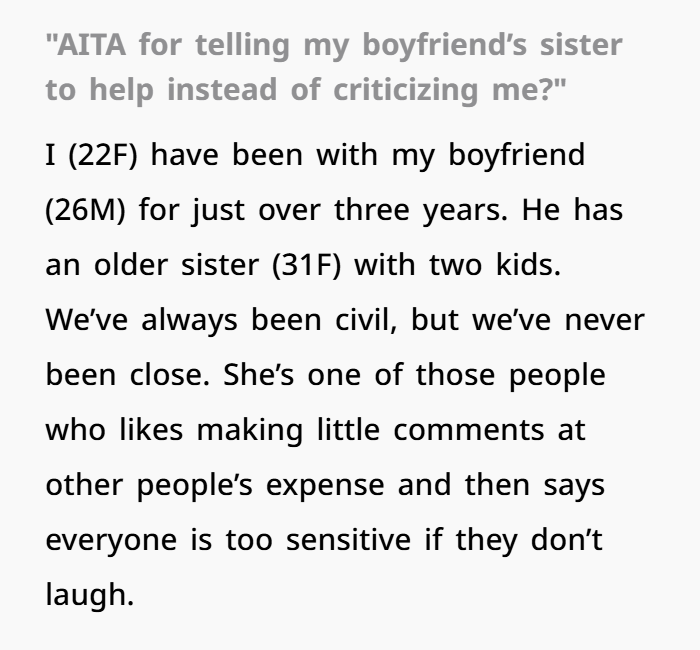
A 22-year-old woman found herself dealing with a difficult family situation after her boyfriend’s older sister kept criticizing her during a big family barbecue.
She had spent the afternoon helping her boyfriend’s mother by preparing food, cleaning up, and serving the guests. But instead of appreciating her help, the sister kept making jokes about her, saying she was just “earning daughter-in-law points” and trying to win everyone’s approval.


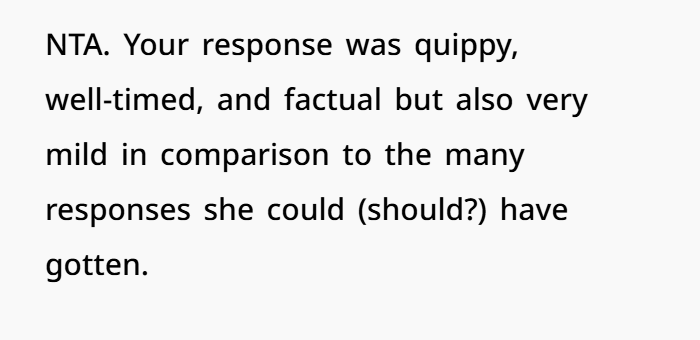
At first, the comments seemed like small jokes, but they continued throughout the day. The situation got worse when the woman finally responded and said that judging someone’s efforts was much easier than actually helping.
Her response caused mixed feelings among the family members. Her boyfriend agreed that his sister had been pushing her buttons, but he worried that speaking up in front of everyone could cause problems at future family events.
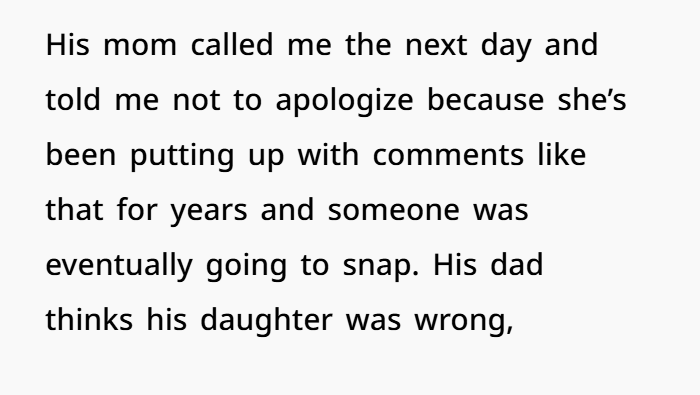
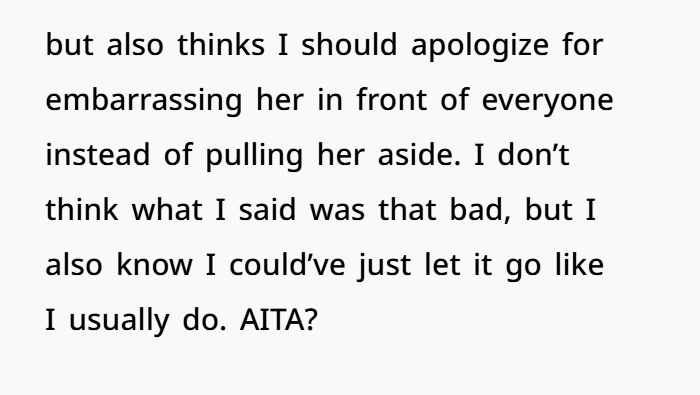
His mother supported the woman’s reaction. She explained that she had dealt with similar comments from the sister for many years. His father also believed the sister was in the wrong, but he felt the conversation should have happened in private.
The situation brings up bigger questions about family boundaries, hurtful comments, passive-aggressive behavior, and knowing when it is okay to stand up for yourself. It also shows the challenge of handling repeated criticism from someone who keeps crossing personal limits.
More info on reddit
Family gatherings can sometimes bring out complicated situations. People often try to keep things peaceful, even when someone’s behavior keeps making others uncomfortable.
In this case, the problem was not really about doing dishes or serving drinks. The bigger issue was a repeated pattern where one family member used sarcastic comments to make another person feel small while expecting everyone else to ignore it.
Experts in communication explain that passive-aggressive behavior often shows up through sarcasm, indirect criticism, teasing, or comments that can later be dismissed by saying, “I was only joking.” These words can become a way for someone to avoid taking responsibility for how their comments affect others.
The difference between a harmless joke and hurtful teasing often depends on respect. A joke should feel comfortable for both people, not just the person making it.
A major part of this situation is about setting healthy boundaries in family relationships. Good boundaries allow people to speak up when they feel disrespected instead of quietly accepting hurtful behavior.
Family researchers, including work based on Murray Bowen’s family systems theory, explain that families can fall into certain roles over time. One person may become the constant critic, someone else may try to keep the peace, and everyone else may adjust around the problem instead of dealing with it.
Many families use the phrase “that’s just how she is” to avoid conflict. While this may keep things calm in the short term, it can also protect harmful behavior. When people keep ignoring disrespect to avoid arguments, frustration can build up until someone finally reacts strongly.
The sister’s comment that she was “just being honest” is another common way criticism can be presented. There is a difference between helpful feedback and personal judgment.
Constructive feedback focuses on actions and offers a way to improve. Hurtful criticism focuses on someone’s character or intentions. Saying someone is “campaigning” or “trying to impress people” does not help them improve. Instead, it questions whether their kindness is even real.
Similar situations can happen at work or in social groups too. Sometimes people who are helpful, successful, or trying hard may face negative comments from others. In psychology, this can be linked to social undermining, where someone slowly damages another person’s confidence or reputation through repeated negative remarks.
While family disagreements can feel serious, most situations like this are not legal matters. Laws around issues like harassment or defamation usually require more than a rude comment or family argument. They often look at things like how serious the behavior is, how often it happens, and whether it causes clear harm.
Relationship experts often suggest dealing with problems early instead of letting anger build over time. Healthy communication means sharing concerns clearly while still showing respect.
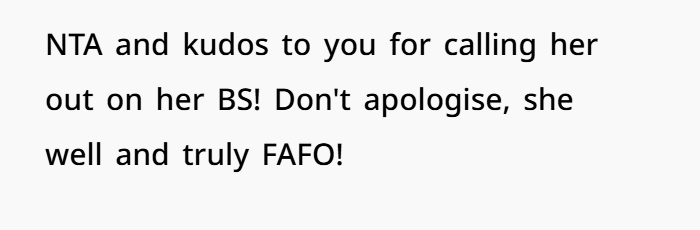
In this situation, the woman’s response was not a planned discussion. It happened after she had faced several public comments. Some people may believe she should have handled it privately to avoid more family tension.
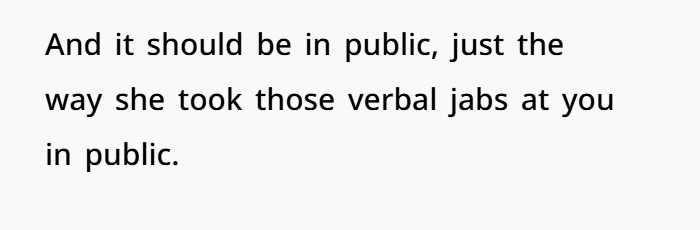
Others may feel that the sister had already chosen a public setting to criticize her, so answering in the same setting was understandable. The key question is whether the response matched the situation or made the conflict bigger.
In the end, the real issue was not one comment at a barbecue. It was a long pattern of allowing one person’s behavior to continue because addressing it felt uncomfortable.
This situation shows a common challenge in relationships: deciding whether keeping temporary peace is worth accepting repeated disrespect.
Here’s what people had to say to OP: